• Ursula English
  • Stacy Nelson
  • Ursula English
  • Stacy Nelson

Viking 23/24 World Cruise

Un’avventura di 141 giorni di Ursula & Stacy Leggi altro
  • Koh Samui, Thailand

    13 marzo 2024, Tailandia ⋅ ☁️ 86 °F

    We had a memorable adventure at Samui Elephant Kingdom! Nestled in the heart of Koh Samui, this sanctuary offers a true paradise for elephants. Here, they're free to be their magnificent selves, far from the burdens they once shouldered in the tourism industry.

    We experienced the thrill of their innovative Skywalk, where we watched the elephants roam freely in their natural habitat, without disturbing their peace.

    The organization guides itself in accordance the internationally recognized 5 Freedoms for Animals. Freedom from:
    1. Hunger/thirst
    2. Discomfort
    3. Pain/injury/disease
    4. Fear/distress
    5. Exploitation.
    Leggi altro

  • Singapore City, Singapore

    15 marzo 2024, Singapore ⋅ ☁️ 90 °F

    Had three days in Singapore where we blended sight-seeing with a few shopping chores. All n all a good stop. The city provided quite the modern experience. Private car ownership is very expensive limiting the number of vehicles on the road and the underground subway was extensive and well run. This created an ‘odd’ atmosphere with lots of people and little traffic. The city itself was clean and well groomed with significant lighting and a vibrant night scene. One could definitely do an extended stay here.Leggi altro

  • Kuala Lumpur, Malaysia

    18 marzo 2024, Malaysia ⋅ ⛅ 88 °F

    We visited the Batu Caves and then toured the city sights with another couple and a private driver. It was nice to avoid buses for the day and move around with ease. China town was the surprise hit where we stumbled across wonderful shops and wall art. Note the purple robes we had to wear in order to enter a Mosque. It was a fun, eclectic day.

    Batu Caves: A landform that has a series of caves and cave temples in Gombak, Selangor, Malaysia. It takes its name from the Malay word batu, meaning 'rock'. The cave complex is one of the most popular Hindu shrines outside India.
    Leggi altro

  • Georgetown, Malaysia

    20 marzo 2024, Malaysia ⋅ ☁️ 79 °F

    We took a trishaw tour of old town which is a UNESCO site. It was filled with wall art, street food, clan houses, small businesses and Asian tourists. We had a surprisingly wonderful time. Stacy left her cellphone in the trishaw and it was returned without incident. We were touched by the sincerity of the local people.Leggi altro

  • Coral Island, Koy Hey, Thailand

    21 marzo 2024, Tailandia ⋅ ☀️ 88 °F

    We went to Banana Beach on Coral Island. Stunning. We wanted one last beach day before heading overland to India and on to Africa. Ursula cut her toe on the coral reef below and had to stick to the lounge chair which afforded an opportunity to take a lot of pictures of Stacy! 🩷

    PS. We don’t know what we had for lunch.
    Leggi altro

  • Cochin, India

    27 marzo 2024, India ⋅ ☀️ 84 °F

    Today we toured Cochin or Kochi. We saw the Chinese fishing nets and local fish market then went to Jew Town for a wonderful afternoon. We stopped by Sarah Cohen’s home (now museum) but it was closed.

    ‘Chinese Fishing Nets’ are fishing nets that are fixed land installations for fishing. Each structure is at least 10 meters high and comprises a cantilever with an outstretched net suspended over the sea and large stones suspended from ropes as counterweights at the other end. Each installation is operated by a team of up to six fishermen.

    Jew Town: Following their expulsion from Iberia in 1492 by the Alhambra Decree, a few families of Sephardi Jews eventually made their way to Cochin in the 16th century. The Raja of Cochin gave them a piece of land next to his palace to build a place of worship.

    They became known as Paradesi Jews (or Foreign Jews). The two communities retained their ethnic and cultural distinctions.
    Among the 8 surviving synagogues, only the Paradesi synagogue still has a regular congregation. Today it also a historic site. The community’s presence dwindled with the migration of Jews to Israel and the death of senior citizens.

    Sarah Jacob Cohen (September 4, 1922 – August 30, 2019) was the oldest living member of Kochi’s Jewish community, visited by The British royal family at Mattancherry, Kochi in November 2013. She was dedicated to keeping alive simple Jewish traditions like the humble kippah making in a far flung Jewish outpost.
    Leggi altro

  • Humayun Tomb, Dehli

    30 marzo 2024, India ⋅ ☀️ 77 °F

    The Humayun's tomb is the tomb of Mughal emperor, Mirza Nasir al-Din Muhammad commonly known as Humayun situated in Delhi, India. The tomb was commissioned by Humayun's first wife and chief consort, Empress Bega Begum under her patronage in 1558. It was the first garden-tomb on the Indian subcontinent, and is located in Nizamuddin East, Delhi, close to the Dina-panah Citadel, also known as Purana Qila (Old Fort), that Humayun found in 1538. It was also the first structure to use red sandstone at such a scale. The tomb was declared a UNESCO World Heritage Site in 1993. Besides the main tomb enclosure of Humayun, several smaller monuments dot the pathway leading up to it, from the main entrance in the West, including one that even pre-dates the main tomb itself, by twenty years; it is the tomb complex of Isa Khan Niazi, an Afghan noble in Sher Shah Suri's court of the Suri dynasty, who fought against the Mughals, constructed in 1547 CE.Leggi altro

  • Qutub Minor, Dehli

    30 marzo 2024, India ⋅ ☀️ 77 °F

    We flew to Delhi for a one-week Viking ‘overland’ tour where we broke away from the group to meet a dear friend, Gagandeep and her family. They took us to see the two of the Mughal Tombs, the Qutb Minar and Akbar the Great.

    This is the Qutb Minar, also spelled Qutub Minar and Qutab Minar, is a minaret and "victory tower" that forms part of the Qutb complex, which lies at the site of Delhi's oldest fortified city, Lal Kot, founded by the Tomar Rajputs. It consists of 399 steps [3] It is a UNESCO World Heritage Site in the Mehrauli area of South Delhi, India.[4][5] It is one of the most visited tourist spots in the city, mostly built between 1199 and 1220
    Leggi altro

  • New Dehli and SHR

    31 marzo 2024, India ⋅ ☀️ 93 °F
  • Taj Mahal, India

    31 marzo 2024, India ⋅ ☀️ 99 °F

    The Taj Mahal ( 'Crown of the Palace') is an ivory-white marble mausoleum on the right bank of the river Yamuna in Agra, Uttar Pradesh, India. It was commissioned in 1631 by the fifth Mughal emperor, Shah Jahan to house the tomb of his beloved wife, Mumtaz Mahal, who dies while giving birth to their 14th child; it also houses the tomb of Shah Jahan himself.

    The tomb is the centrepiece of a 42-acre complex, which includes a mosque and a guest house, and is set in formal gardens bounded on three sides by a crenellated wall.

    The Taj Mahal attracts around 5 million visitors a year and in 2007, it was declared one of the New 7 Wonders of the World.
    Leggi altro

  • Port Elizabeth, South Africa

    8 aprile 2024, Sud Africa ⋅ ☁️ 66 °F

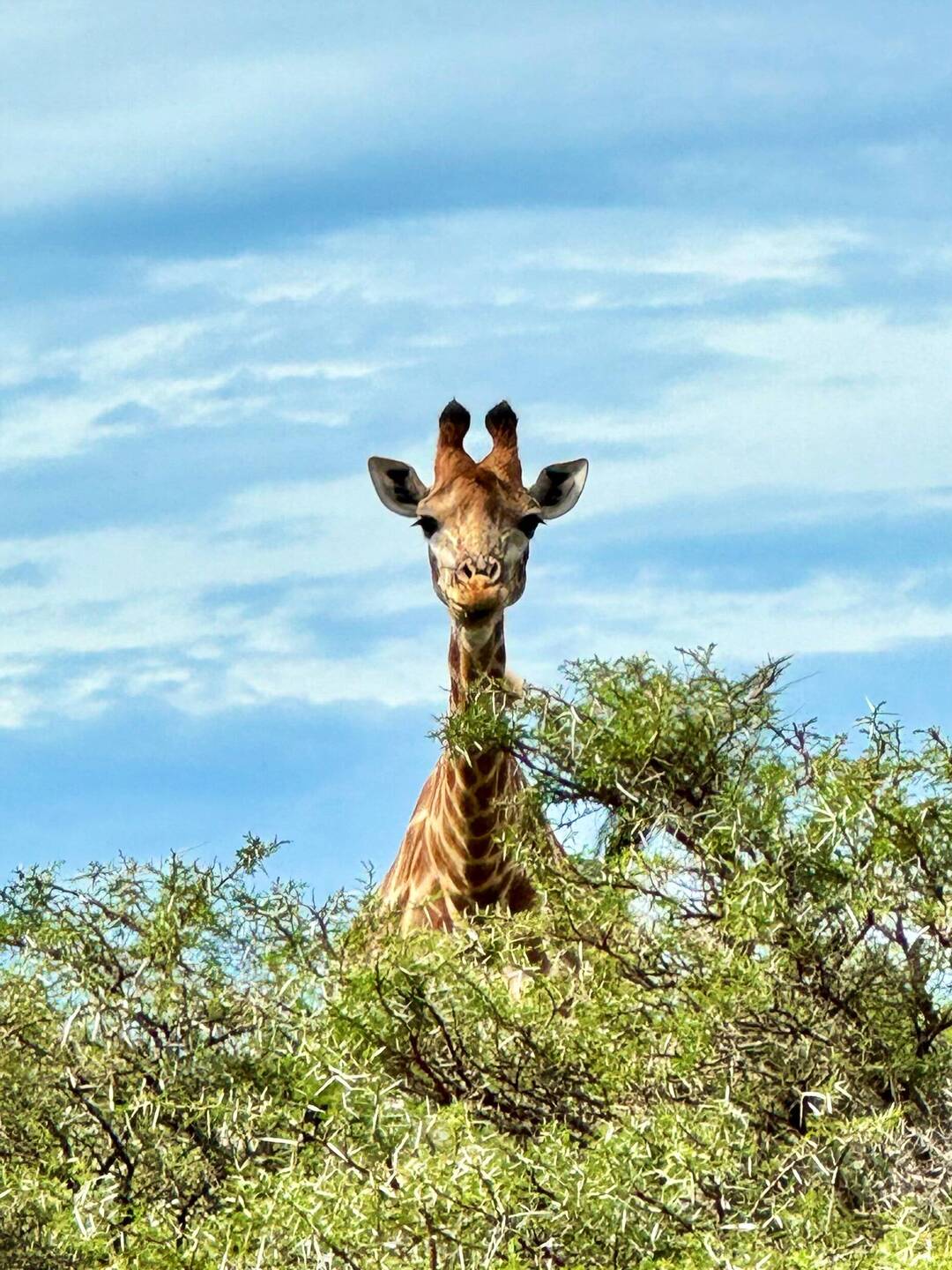
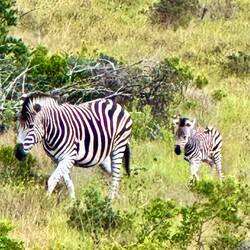
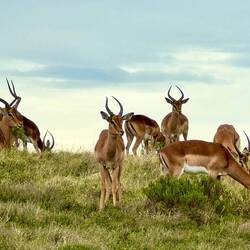
    We were supposed to disembark the ship in Richard’s Bay, South Africa and do an ‘overland’ Safari for five days but high winds prevented the ship from being able to dock. We sailed onward and made it to Port Elizabeth where we are able to do a three hour Safari and lunch at Kariega Game Reserve. It was truly spectacular! A definite highlight of the trip.Leggi altro

  • Cape Town, South Africa

    10 aprile 2024, Sud Africa ⋅ 🌬 68 °F

    We came into Cape Town and did a food tour with a few of our friends from the ship. The day started with a rainy attempt at making it up to Table Mountain which was socked in with fog.

    We visited The Company’s Garden which is the oldest garden in South Africa. The garden was originally created in the 1650s by the region's first European settlers and provided fertile ground to grow fresh produce to replenish ships rounding the Cape.

    Sadly, as we walked through Cape Town, there were still remnant of its racially segregated past. 💔

    We went to the Bo-Kaap neighborhood which is known for its brightly coloured homes and cobblestoned streets. The area is traditionally a multicultural neighbourhood, with more than half of its population identifying as Muslim. There was a lot of street art that reflected political views.

    The highlight was learning to make Samosas at a local woman’s private home. A samosa is a fried South Asian pastry with a savoury filling, including ingredients such as spiced potatoes, onions, peas, meat, or fish. It is made into different shapes, including triangular, cone, or crescent, depending on the region.

    Our chef/host, Hermita, had a cat that we adored who reminded us of our own Sophie and Emma back home.

    The day concluded with a sunny shot of Table Mountain taken once we got back on the ship.
    We ended up staying in Cape Town two days due to high winds but on the second day, we could not get off the ship so that was our view for the day.
    Leggi altro

  • Walvis Bay, Namibia

    13 aprile 2024, Namibia ⋅ ☀️ 66 °F

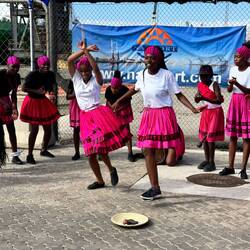
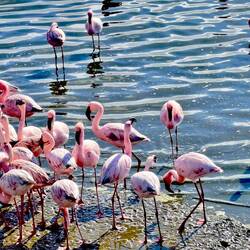
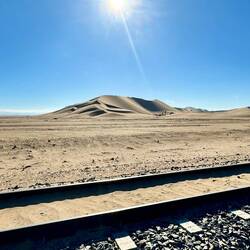
    Our ship was unable to leave Cape Town due to high winds and as a result of the late departure, we were late to arrive in Walvis Bay. But not all was lost as Viking arranged for us to visit the Namib-Naukluft National Park during sunset. We enjoyed food, drink, music and dance - all provided by the local community which was very open and welcoming. We had a wonderful night dancing under the stars and even got to see the Southern Cross as well as the International Space Station fly by!

    Namibia (officially the Republic of Namibia), is a country in Southern Africa. Its western border is the Atlantic Ocean. It shares land borders with Angola and Zambia to the north, Botswana to the east and South Africa to the east and south.

    9 Interesting facts about Namibia:
    1. Namibia is a little-known country in the southern part of Africa. It is home to the world’s oldest desert. According to scientists, Namib Desert is over 55 million years old!
    2. About 30 languages are spoken in the country. The most popular of these is Oshiwambo. English is the recognized official language
    3. It has some of the highest sand dunes in the world. The highest dune in the area rises to 383 metres. Climbing dunes to watch the sunrise is actually a popular tourist activity in the country.
    4. It hosted the world’s most extensive meteorite shower. The Gibeon meteorite shower occurred in prehistoric times in the central part of Namibia. It covered an elliptical area of 275 by 100 km. Remains from this meteorite shower are exhibited at Windhoek, Namibia's capital city.
    5. It contains one of the largest concentrations of rock art in Africa. The San have resided in the country for more than 6,000 years, and there is more than enough rock art to confirm this.
    6. It has the largest population of free roaming cheetahs in the world. At the Cheetah Conservation in Namibia, you can run across one of the 3,000 or so free roaming cheetahs in the country.
    7. It is also home to the second largest canyon in the world. The Fish River Canyon, located close to the border with South Africa, is also the oldest in the world. Researchers have determined that the canyon was formed at least 500 million years ago through water and wind erosion, coupled with the collapse of the valley floor.
    8. The most fascinating traditional tribe in Africa lives in Namibia. The Himba tribe in the Kunene region of the country have strongly clung to their traditional ways and beliefs. They wear traditional clothes, eat traditional foods and even practice traditional religions. The women wear skirts and leave their upper body bare. Basically, they have been unaffected by modernism in any way.
    9. The Skeleton Coast is the world’s biggest grave site for sailors and ships.
    Leggi altro

  • The Rock

    13 aprile 2024, Namibia ⋅ ☀️ 77 °F

    While in Wallis Bay, Viking arranged a trip to ‘Valley of the Moon’ to observe sunset and the stars. This was in response to the ship’s delay for weather conditions and an attempt by the cruise line to ensure passengers had a meaningful ‘excursion’ during our short stay in port. In order to accommodate our large numbers, it seemed every tour guide and off road vehicle across the whole of Namibia had been scrounged up to assist.

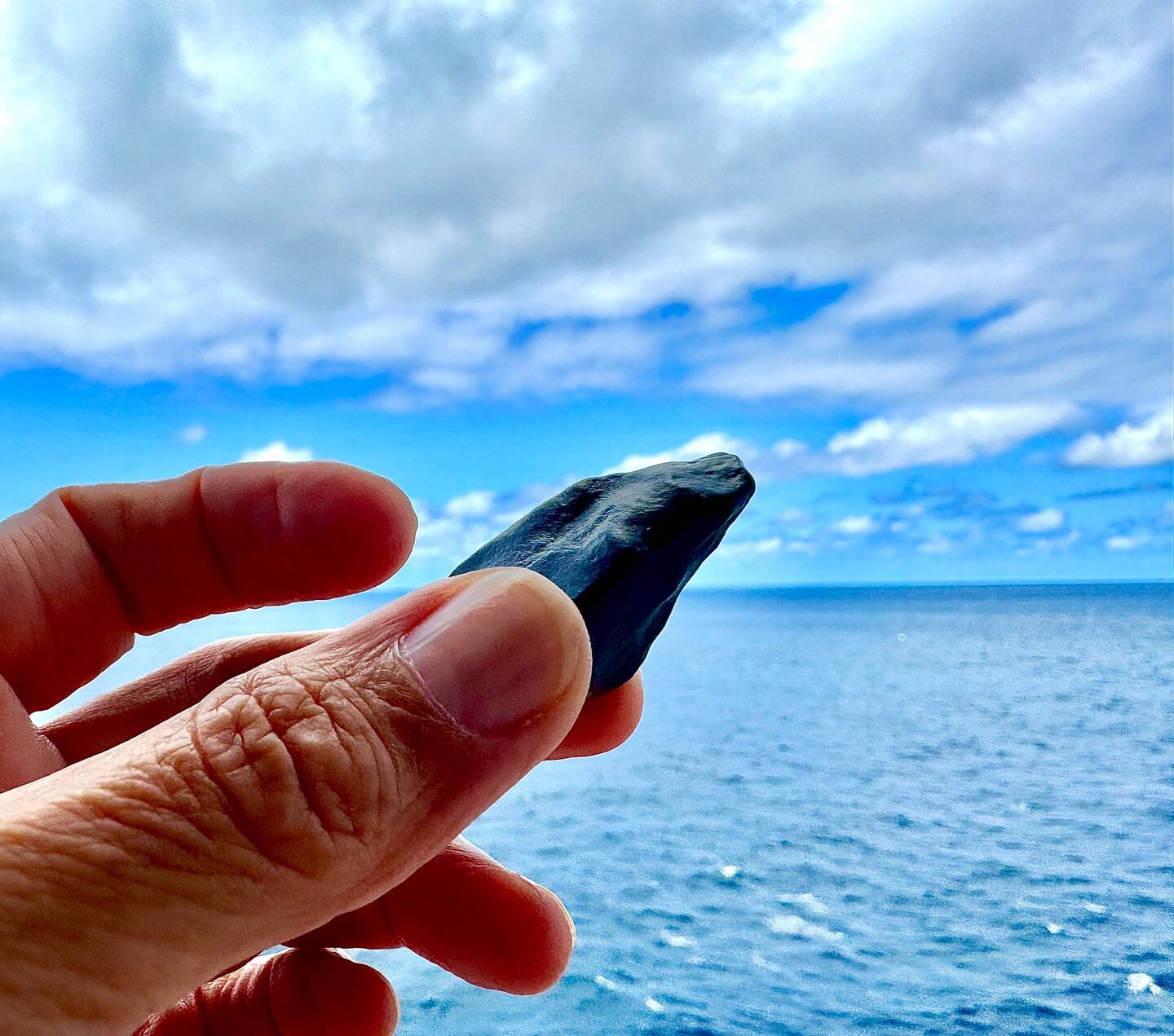
    On our way out to the valley, we (hundreds of Viking passengers) stopped at ‘Dune 7’. I was alone because Stacy was sick and had stayed back on the ship. As I was quietly observing the breathtaking views (in this massive crowd), a tour guide approached me and simply asked, “Do you want a rock?” I replied, “Yes!” Why this man picked me out of the crowd, I don’t know. As he began to tell me about the rock, we got interrupted to reload vehicles and continue on. I wanted to know all about the rock so I tried to remember the man’s weathered looks and shaggy blonde hair before we got underway.

    At the Valley of the Moon, I looked and looked but the man just wasn’t there. I settled into listening to music and watching people dance. I silently witnessed the sun set ever so slowly revealing a sliver of moon along with the Southern Cross. It was magnificent. But that’s not the story!

    Here is the story…

    When my twin brother died in 1995, I made a practice of spreading a little bit of his ashes wherever I went. In return, I would pick up a rock from the same place and bring it back to his urn. Over the last 29 years, I have done this, slowly filling up his urn with rocks as I spread his ashes. It was my quiet way of trying to share my life with him.

    When we embarked on this World Cruise, I realized I had forgotten his ashes. I was distraught about it. I couldn’t believe it! How could I?! I had to keep letting it go but I would slip back into feeling terrible about it. Recently, I thought I should have been collecting rocks, at least. Even if I didn’t spread any ashes, I could still bring back rocks for the urn. But, by the time I thought of that, we had completed too much of the trip. I fell deeper into sadness about it all and was downright angry with myself.

    Then, this happened. In the middle of the oldest desert in the world, a man singles me out and hands me a rock that is, itself, millions of years old. Then, the man disappears.

    I now have one very special rock that I believe was a gift from my twin brother, Dewey, who came to see me for just a moment to show me he is still out there in the universe and he is still here with me. That he loves me as I love him. And, I needn’t worry about falling short. It’s all okay exactly as it is. What a gift! I was overcome with emotion and gratitude for this evening spent side by side with my brother after all these years and in such an incredible place - a 55 million year old desert where there is no rain - or tears - depending on how I look at it. 🩷
    Leggi altro

  • Null Island

    17 aprile 2024, North Atlantic Ocean ⋅ ☁️ 86 °F

    The captain ‘swung by’ Null Island! So cool.

    Null Island is the location at zero degrees latitude and zero degrees longitude (0°N 0°E), i.e., where the prime meridian and the equator intersect. The name is often used in mapping software as a placeholder to help find and correct database entries that have erroneously been assigned the coordinates 0,0.Leggi altro

  • Dakar, Senegal

    21 aprile 2024, Senegal ⋅ ☀️ 72 °F

    This was the saddest day of our entire trip. We visited the Island of Gorée. Neither Stacy nor I could sleep afterward as it was just heart wrenching to stand in the very spot where millions of Africans were sold into slavery. And, to realize that the masters quarters were located directly overhead of the slave’s prison was despicable. While difficult, we felt it was important to see and to remember.

    Goree Island is a small 45-acre island located off the coast of Senegal. It was developed as a center of the expanding European slave trade of Black African people.

    The first record of slave trading there dates back to 1536 and was conducted by the Portuguese, the first Europeans to set foot on the Island in 1444. The house of slaves was built in 1776. Built by the Dutch, it is the last slave house still in Goree and now serves as a museum. The island is considered a memorial to the Black Diaspora.

    An estimated 20 million Africans passed through the Island between the mid-1500s and the mid-1800s. During the African slave trade, Goree Island was a slave-holding warehouse, an absolute center for the trade of African men, women, and children. Millions of West Africans were taken against their will. These Africans were brought to Goree Island, sold into slavery, and held in the holding warehouse on the island until they were shipped across the Atlantic Ocean. They were sold in South America, the Caribbean, and North America to create a new world. The living conditions of the slaves on Goree Island were atrocious.

    Human beings were chained and shackled. As many as 30 men would sit in an 8-square-foot cell with only a small slit of the window facing outward. Once a day, they were fed and allowed to attend to their needs, but still, the house was overrun with the disease. They were naked except for a piece of cloth around their waists. They were put in a long narrow cell to lie on the floor, one against the other. The children were separated from their mothers. Their mothers were across the courtyard, likely unable to hear their children cry. The rebellious Africans were locked up in an oppressive, small cubicle under the stairs; while seawater was sipped through the holes to ease dehydration.

    Above their heads, in the dealer's apartments, balls and festivities were going on. But even more, poignant and heart-wrenching than the cells and the chains was the small "door of no return" through which every man, woman, and child walked to the slave boat, catching a last glimpse of their homeland.

    When the French abolished slavery in 1848, 6000 persons and 5000 former captives lived on the island. Designated by the United Nations Educational, Scientific Cultural Organization (UNESCO) to be a World Heritage Site, Goree Island in the 21st century retains and preserves all the traces of its terrible past.

    The main Slaves' House built in 1777 remains intact with cells and shackles; the Historical Museum, the Maritime Museum, residential homes, and forts are also standing. The Island today has about 1000 residents.
    Leggi altro

  • Santa Cruz De Tenerife, Spain

    24 aprile 2024, Spagna ⋅ ☀️ 73 °F

    We took 4x4 jeeps to visit Masca and Tiede National Park. Absolutely stunning landscape throughout the harrowing drive across the mountains.

    Masca is a small mountain village on the island of Tenerife. It was originally a Guanche settlement before the Spanish conquest in 1496. The village is now home to around 90 inhabitants. The village lies at an altitude of 650 m in the Macizo de Teno mountains, which extend up to the northwesternmost point of Tenerife.

    Teide National Park is on Tenerife, the largest of Spain’s Canary Islands. It's named for Mount Teide, a towering volcano and the highest peak in Spain. Trails and the Teide Cable Car lead to the summit. To the west, Pico Viejo has crater views. The unusual rock formations of Roques de García include the iconic Roque Cinchado column.
    Leggi altro