• Alilles
  • Alilles

Alilles on Tour

Una aventura de 273 días de Alilles Leer más
  • Waqrapukara - the horned fortress

    24 de septiembre de 2023, Perú ⋅ ☁️ 15 °C

    The legend says* that a talented and well-known Inka general named T’ito Qosñipa fell in love with the Waqrapukara hill (without the fortress at that time**) SO HARD that he not only decided to switch over to the rivaling clan to which the hill belonged, but also worked his way up in this clan to become their new clan leader! (Sneaky). After our Inka general built his completely extraordinary fort - one may even call it exaggerated, but who are we to judge - which we now know as Waqrapukara, he seemed to have suffered a serious case of megalomania (how could he not living in Waqrapukara?!) and ordered ‘his’ clan into open rebellion against the Inka king. Even though they resisted the attacks by the kings army for quite a while by retreating into the generals impossible-to-conquer residence of Waqrapukara, the kings army soon found and cut off their water supply, forcing them to give up their resistance and rebellion. Interestingly, our general and his crew did not get executed by the king - on the contrary, our general got employed by the Inka king and soon enough rose to a high position within the kings army (how undeserved), while his former clan subjects merely lost one of their ears each. What a generous act, especially considering that inka kings usually were super bloodthirsty and unforgiving - the general really must have something on him. 😉
    Unfortunately, we did not find out what use Waqrapukara served after our treacherous general got humbled by the king, but due to the placement and structures of the temple ruins we assume that it was used further for religious ceremonies (call us inka experts 💁🏻‍♀️). Anyways, we are very happy that - unlike most other Inka structures in close(r) proximity to Cusco - the spanish conquerors did not reach and destroy Waqrapukara. It truly was one of the most magical and impressive remnants we’ve encountered so far!! And we have to admit that we fully understand why our general fell in love with this place - the views of and from Waqrapukara are unmatched ❤️
    If you’d like to visit Waqrapukara, note the following tips:
    1) Camp overnight. The camp has water, a sheltered small kitchen area and costs 10 soles per person including the entry to Waqrapukara. Seeing the sunset in the deep rugged valley is an unique and beautiful sight! And you’ll very likely have it by yourself in the early evening (we had it all to ourselves the whole day, night AND morning, same with the camping).
    2) The way to and especially from Waqrapukara is a mess. It turned out that all agencies we asked for information and that told us ‘it is all on the internet’ did not have any idea how to get there and back themselves 😂 Getting there took us three hours and a ride with a very cute local man in his very rusty car we would have never thought to make the narrow and steep dirt-and-gravel road to the trailhead (props to our driver for getting us there alive! 🤚🏼). For the way back we chose one of the two tiny villages said to have taxis - the one we chose had not, but they did have a bunch of supercute tiny humans running around instead 🤷🏻‍♀️ We still got a random guy to drive us to Acomayo, where there was supposed to be a bus back to Cusco, but according to our driver leaving 3 hours after our arrival. Well, after walking 10km in the blazing sun, we then agreed to the generous offer (and the not-so-generous price) of our driver to take us all the way back to Cusco. While we were driven through Acomayo, it turned out that there were multiple buses from Acomayo to Cusco as seen from our windows, but at time we’ve already been too comfortable to cancel the offer 🤷🏻‍♀️. So we arrived back in Cusco in the evening after a hot 3 hour private drive, with a hole in our stomach (we prepared lunch for the bus, but not for a private car 🙃) and a hole in our wallet, but very very happy with the whole experience and we would definitely do it all over again! Waqrapukara for life ❤️❤️
    Final note: We do not guarantee for the correctness of abovementioned story about Waqrapukara as it differs from source to source. We just told you the story we liked the most to be honest 😉

    *Another theory of the origin of Waqrapukara - which is way less interesting that our story above - is that the site was created as a kind of astronomical observatory, together with a sanctuary to the creator god Illa Teqci Pacha Kamaq Wiraqocha.

    **The inkas actually conquered and rebuilt the site which is said to originally have been a small citadel called Llaqta Pukara built by and for the Qanchi people, dating way before the inkas.
    Leer más

  • Salkantay trek to Machu Picchu

    28 de septiembre de 2023, Perú ⋅ ☁️ 10 °C

    We were thinking about doing one of the treks leading to Machu Picchu - specifically either the Inca trail or the Salkantay trek as the cheaper alternative - for a while before going to Cusco. However, when our favorite Germans told us they are doing the Salkantay trek and asked us if we’d like to join in, we did not have to think twice: Salkantay it is, then! Different than the original Inca Trail (which costs around 700 - 900 $ per person by the way), the Salkantay trek comes with basic but comfortable accomodations (no tents to pack!) and does not end in Machu Picchu, but in the tiny tourist-village of Aguas Calientes located on the foot of the Machu Picchu hill. This also means that you have to go through the totally overcomplicated, very confusing and slightly peculiar process of acquiring your Machu Picchu tickets by yourself in the official Machu Picchu office - a fun though nerve-wracking experience which will very much add to your excitement to finally get to see the old ruins and should definitely be followed by some well-deserved Pisco Sours to celebrate 😂
    The Salkantay trek covers a distance of 72 km (or ~60 km on our case 😬) which is done in 5 days and 4 nights, with the highest point being 4650 m (more infos on the itinary below). We were trekking with two “families” - as the Salkantay trekking groups are called- and we were delighted to find all of our “family members” to be super nice and interesting people! ❤️ And this was, in all honesty, also the very best part of the Salkantay trek: Amazing people and a very lovely guide. We decided on the very fitting family name “Churros”, which we learned is not only the name of the delicious fried sweets that are sold everywhere in south america, but is in certain countries also used as a compliment meaning ‘very good looking’ - as I said, super well fitting 💁🏻‍♀️ 😉. So we spent our days walking, talking, enjoying the surprisingly delicious meals prepped by our personal family cooks and being very excited to get to Machu Picchu. Even though we do not think of the landscapes to be the most spectacular we’ve seen or the treks being the hardest we’ve done so far (call us spoiled and well-trained), we really enjoyed the experience on the Salkantay trek.

    ITINERARY
    Day 1: Challacancha (3380 m) - Valley of Mollepata - Soraypampa (3900m, campsite) - excursion to Humantay Lagoon (4220 m, with live avalanche 😲)
    Hiking distance: 12km

    Day 2: Soraypampa - Salkantay pass (4650 m) - Huarachmachhay (3800 m, lunch break) - Collapampa (campsite)
    Hiking distance: 22 km

    Day 3: Collapampa - Lucmabamba ( campsite) - Cocalmayo hot springs (and maybe some beers after 🥴)
    Hiking distance: 14 km

    Day 4 (for part of the family who wanted to get to Aguas Calientes in the morning so we can get tickets for Machu Picchu for early next morning): Bus from Lucmabamba to Hydroelectrica - Aguas Calientes for getting the tickets (and the Pisco Sours 😉)
    Hiking distance: 10 km (instead of 18)

    Day 5: MACHU PICCHU! 🥳 new footprint, of course!
    Leer más

  • Machu Picchu

    2 de octubre de 2023, Perú ⋅ ☀️ 19 °C

    Machu Picchu means old mountain in the Quechuan language, which is (one of) the native language(s) of Peru and of many other indigenous andean folks. Before we throw out some more facts about Perus most famous tourist attraction there is one more very important thing we’d like to share here: According to our guide (and Wikipedia!), the correct pronounciation of the name is ‘Matschu Pi*k*tschu’, and not ‘Pitschu’ - even though basically everyone does pronounce it like the latter. Why is this important? Because ‘pitschu’ apparently means p*nis 😂 (again, no guarantee given for the correctness of this statement!), and so now you know an insult in the Quechua language. You’re welcome!
    Anyways, here are some more hard facts (or well-accepted theories 🤔) on and about Machu Picchu:
    - The site was built before the 15th century on 2430m as a religious sanctuary (not built as a permanent living space for the incan people). However, the Machu Picchu infrastructure also features a water source (by diverting a natural water source from a nearby mountain via channels) as well as many typical inca terraces which - in theory - were used to grow crops. So another theory is that it was initially built as a (very pretentious) residence.
    - To date, ‘only’ 30% of the site has been restored (looking good, old lad!). But also the residual 70% is in pretty good condition, because due to its remote and elevated location, the spanish did not find and destroy it when raiding the former Inca empire (the site was only ‘officially rediscovered’ in 1911).
    - The reason why it was abandoned - or why people stopped using the religious site - is unknown, but it is suspected that it has something to do with the spanish conquisition of south america and the resulting absorption of the Incas and their culture by the colonialist lifestyle.
    - Machu Picchu was still under construction when abandoned, as can be seen by a stonemason area on the site, containing half-cropped building blocks for whatever.

    Our personal (and rather unpopular) opinion on Machu Picchu is that even though it is by all means a very impressive place and certainly also impressively well conserved, we think Machu Picchu to be a tad overhyped - yes, it is super beautiful, and yes, it is very exciting to walk around between the ruins, but it is certainly not the magical, life-changing experience as sold by all those influencers (which were super fun to watch at Machu Picchu, by the way). Or at least it was no life changer for us, call us dull if you want 🤷🏻‍♀️.
    Leer más

  • Copacabana & Isla del Sol, Bolivia

    6 de octubre de 2023, Bolivia ⋅ ☀️ 15 °C

    Hello Bolivia, country number 9! Due to recurring recommendations, we skipped the peruvian part of lake Titicaca and went directly to Copacabana in Bolivia. Copacabana is another tourist town used as stop-over on the way to la Paz or/and as the gateway to the famous Isla del Sol. Besides visiting the island(s) and watching the rather impressive sunsets at the shore of lake Titicaca (with either good peruvian or shitty bolivian beer), there is not much to do in Copacabana. In fact, we found that Copacabana lacked all the charme which we kind of expected it to have - I guess we will never learn to either lower our expectations or to look destinations up before we go 🤷🏻‍♀️ - and even though super touristy for years, it had only non-aestethically pleasing restaurants with below-average food and bad coffee. Nevertheless, and especially looking back now, it was a really interesting first stop in Bolivia as it threw all the main differences to Peru straight into your face: much more dirty, and much less developed. Especially interesting - and a little shocking - was the viewpoint on Cerro Calvario, which is frequently used as a spot to watch the sunset over the lake Titicaca. What it really is, though, is a religious place, and the way up is lined with 14 crosses, representing a Via Crucis (look it up if interested, a catholic thing that has to do with Jesus suffering on his way to his crucifixion) and leading to a big-ass holy virgin depiction. What we found all the way up and on top of the rather holy place - besides the group of praying pilgrims - were loads and loads of empty beer bottles, cans, broken glass and other waste of all different kinds.

    The Isla del Sol is a small island on the Titicaca lake which plays a crucial role in the believes of the Incas: It was on the Isla del Sol where the very first Inca - son of the sun god Inti and the moon goddess Mama Killa (that’s her name, no kidding) appeared.
    The whole Island can be crossed by foot in approx. 3 hours and can be roughly divided into the touristy south with many hotels, hostals and the famous Inca templo del sol, and the more quiet and less touristy north of the island. As we were really feeling the need of some quiet and slow days after our sick-days in Cusco, we opted for the North and had no regrets whatsoever about it from the very first second of arrival! The little village called Challapampa, at which we had our hostal, is a sleepy little thing with only few tourists, few restaurant choices and very-little-to-no Wifi available, but instead offers a lot of free running pigs, donkeys, cats and dogs in the streets and on the beach and the loveliest town folk ever ❤️ So we spent our two days on the island watching the sleepy Challapampa life go by, eating delicious fresh trout from lake Titicaca, and a little bit of hiking to the ruins of the Chincana labyrinth and the nearest village called Challa. The labyrinth, by the way, was amazing and truly the very definition of a labyrinth - lucky us that it is a ruin and therefore easier to navigate due to its low walls, otherwise we’d have spent more time there 😂
    Enjoy the views, the sunset and the sunrise over lake Titicaca as seen from the beautiful Challapampa village ❤️
    Leer más

  • La Paz

    9 de octubre de 2023, Bolivia ⋅ ☀️ 15 °C

    La Paz, Bolivias inofficial capital and the best place for foodies!! It is super busy with locals in traditional clothing, famous for its (rather weird) witch market with all the mummified and stuffed baby lamas, features several cable cars running all over the city and we absolutely loved its vibe. Right next to the very local area of the witch market, where we had our base for our stay in la Paz, was the super colourful tourist area which is lined with souvenir- and clothing stores, trendy bars and lots and lots of the usual very instagrammable decorations, such as a series of umbrellas being hung over the alleys just for the sake of looking pretty (don’t get me wrong, I’m loving it the same as everyone else 🫶🏼). Furthermore, the city has the most beautiful cemetery we’ve ever seen: the coffins are ‘stored’ in constructions which can be as high as a two-story house, and each ‘coffin nook’ has a little window in front where friends and family can display anything they want in memory of the deceased - photographs, flowers, but also sweets, coca cola, beer and cigarettes are on display and tell you a little bit about the deceased. Super interesting to roam about, and all the very modern and beautifully done murals throughout the cemetery make it a place where you can easily spend hours!
    The cemetery is certainly not the only place with murals, mind you. As with so many cities in south america, the colourful and huge paintings can be found all over the city and invite you to stop and marvel every each and other step 😲. La Paz even has one whole neighbourhood completely painted in bright colours, a super fun variety for the eyes in the midst of the otherwise plainly brick-red buildings of south america 🌈!
    As mentioned before, la Paz is very well-known for many high-class yet very affordable (for us tourists, at least) restaurants. Accompagnied by our German friends which are HUGE foodies 😄, we therefore explored two of the most popular high-class restaurants and, after they left, even had one evening all by ourselves (call it date night if you like) in another one of the place-to-be’s. However, and maybe also because we usually prefer simple food over experimental kitchens, we were not impressed by any of the plates served - Alina even got food poisoning from one of them (presumably - you can never tell for sure where the stomach bugs come from when in Bolivia) 🤷🏻‍♀️. So unfortunately, our very enjoyable stay in la Paz ended with one and a half days in bed (or on the toilet - thank you Bolivia for having aircushioned toilet seats!) and a missed nightbus. Moral of the story: If they say everyone who visits Bolivia will be food sick at least once, believe them. But don’t let that hold you back - there are too many delicious things to try (and you will get it anyways) 😉.
    Leer más

  • Sucre

    14 de octubre de 2023, Bolivia ⋅ ☁️ 16 °C

    We took a nightbus from the inofficial to the official capital of Bolivia: Sucre. But as exciting as we found la Paz, as boring was Sucre to us. Nevertheless, it is a very pretty, very clean and very white city, with its city center having a very colonial architecture and which has been declared a UNESCO world heritage site. If you ask Google for things to in Sucre, it gives you a couple of museums and a couple of historical buildings that you can look at - but that’s about it. We were not really in the mood for museums and having a food-and-drinks day was sadly still not an option for Alina(s stomach), and after a failed attempt to relieve our backpacks from a few souvenirs we’ve brought from la Paz by sending a package home (never trust Google on their reporting of opening times), we were basically done with the city. Funnily, looking around the main plaza of Sucre, we got the feeling that we were not the only tourists feeling somewhat lost in the quietness and lack of to-dos in Sucre 😉. But we have to admit that as we arrived very very early on a saturday morning, it may just have been the wrong time and day for us to be in Sucre. Still, we decided to skip ‘Sucre on a peaceful sunday’ and take a day ride to Potosi and from Potosi to Uyuni where the real adventure awaited us: the long-longed-for Salar de Uyuni!Leer más

  • Potosi - Uyuni

    15 de octubre de 2023, Bolivia ⋅ ⛅ 14 °C

    First of all, we did not regret leaving Sucre and taking a day bus to Uyuni for one second - it was our first time to really see the Bolivian landscapes and we loved it! It is wild, rugged, vast, but at the same time remarkably diverse - nothing we’ve ever seen so far and extremely beautiful.
    We actually wanted to go and explore Potosi during our stop-over, which is a city well-known for its nearby silver mines, but turns out it was just not meant to be for us: Same as for our initial plan to have one night and one morning in Potosi (including a tour to the mines), also the desired short exploration of the said-to-be very pretty old town of Potosi during our stopover ended in a very thorough investigation of the bus terminal bathrooms 🤷🏻‍♀️ (Alina will for sure place some serious complaints to Immodium after the travel - sorry for too much information on that topic 😬). So, no Potosi for us this time 😔. We were, however, very much comforted by the beautiful bus ride to Uyuni after our break - the upcoming sunset just added up perfectly to the already gorgeous landscapes 🥰!
    We arrived in Uyuni ‘city’ at around 20:30 and luckily, we have been warned about the place not being nice and got tipps from our personal german travel agency on a good pizza restaurant in town. So it was checking in into the hotel, getting some pizza (or camomile tea) for dinner and heading to bed, ready to start our 3-days-2-nights Salar de Uyuni tour the next day 🥳.
    Leer más

  • Salar de Uyuni tour - part I

    16 de octubre de 2023, Bolivia ⋅ ☀️ 19 °C

    When in Boliviav visiting the Salar de Uyuni is a must. We took a tour for 3 days and 2 nights, starting from Uyuni and bringing us over the border to Chile in the end. We knew already that the tour involves a lot of sitting in the car as the Salar and the whole area of Bolivia towards the border of Chile is vast and mostly empty, but considering Alinas current issues we were actually looking forward to be driven around for hours, looking at the beautiful Bolivian landscapes. Our expectations were not disappointed in regards to beautiful views!
    The first day started with a visit to the nost touristy place we‘ve may had so far: The salt refinery (where they supposedly still harvest and process the Salt coming from the Uyuni Salt fkats by hand, including adding Iodine to it) and the train cemetery. Interesting fact on the buildings in and around the Salt flat: Whole buildings are made of blocks of salt (which looks super cool) because it is so abundant! And as for the train cemetery: Never have we seen such a crowd of fame-hungry instagrammers trying desperately to get an instagram-worthy shot with only themselves on the picture - a real challenge given the crowd 😂 We admit that the train cemetery was super cool and that all the old, rusty, half-rotten and sometimes artfully ‚vandalised‘ trains (which used to bring the salt to Chile in earlier days) are superb photo motives, but oh my god, so many stupid people 😂 So we did some climbing on the waggons, got some pictures ourselves but got out of there as quickly as possible!
    After some time in the car we already arrived at the actual highlight of the tour: the middle of the Uyuni Salt Flats. It is exactly how it is shown in all the pictures: very white 😉 (we did not have the mirror effect as - fortunately - it did not rain). But joking aside, it truly is a very unique landscape and nothing we‘ve ever seen before, so we were very happy!! We (or Gilles) also managed to have at least a bit of fun during these very obligatory but rather stupid Uyuni-Salt-Flat photoshootings 😂 After a visit to the famous Incahuasi Island (translated as ‚house of the Incas’) with its many cactuses (according to the guide around 400‘000, but that‘s bullsh*t 🙄), we continued our drive theough the salt flats, enjoying the vast area of salt around us until we stopped for the sunset - And oh, what a sunset we were able to witness on the Salt Flats 😍 (including a super cute apero from our guide with wine and chips 🍷) - spectacular!!
    After sunset and another long drive we arrived at the very interesting Salt Hotel (the name was the program: the walls of the rooms and even the floors!! were all salt 😲) rather late. We all looked forward to dinner and the whole group was half amused, half shook when it arrived - see picture of the luke warm gourmet „casserole“ we got (for once Alina was happy to eat only crackers as a meal) 😂. Despite the food we had a good night of sleep and were ready to see more of Bolivias outback the next day!
    Leer más

  • Salar de Uyuni tour - part II

    17 de octubre de 2023, Bolivia ⋅ ☁️ 13 °C

    Our route on the second day of the tour took us from the rear of Salar de Uyuni through the Eduardo Avaroa Park and into the Siloli Desert. We had a toral of 6 stops along the way, so a loooot of relaxing driving! 😴
    The first stop was after passing through another, smaller Salt flat named Salar Chiguana, where we visited the railway tracks that lead through the whole outback and into Chile - it is still in use today for transport of salt. The second stop lead us to the Ollague volcano viewpoint to see - you guessed it - the Ollague volcano 😉, which is dormant but has a small opening on top that still releases smoke. Also, the viewpoint is surrounded by big orange and wave-like stone structures that are actually cold lava - really cool! But almost the best thing about this second stop was the little ski-hut (you cannot describe it any better) blasting hits from the 80‘s and 90‘s and serving the most delicious lama sausage sandwiches 🤤
    With fresh strength we continued our journey to see the altiplanic lagoons in the Eduardo Avaroa Park and stopped first for a wild ostrich (😍) and afterwards at the lagunas Cañapa and Hedionda (which means the stinky lagoon - fitting name, let me tell you!), where we had lunch and a rest. Both lagunas were super georgeous and PACKED with flamingos 🦩😍
    On the way to our next stop, the white laguna (or so I believe to remeber its name - the description would fit though 🤷🏻‍♀️), we encountered our next highlight: An supposed-to-be-wild-but-obviously-regurarily-fed-by-stupid-tourists (😒) andean fox! A gorgeous thing 😍
    Further into the Siloli desert we stopped at the ‚stone tree‘ - nice but no highlight - and a Vizcocha-observing spot/obviously feeding place (an andean rodent which belongs to the Chinchilla family and looks like a weird mixture of rabbit and squirrel) where we were a tad disgusted by the tameness (and fatness) of the Vizcochas… But the lava stones, which are the actual attraction at this stop, and the green of the desert moss patches were still lovely to see! The last highlight of the day was the Laguna Colorado, which is a gorgeous red-blue-white lagoon again packed with flamingos. Supergorgeous!! After this last lovely stop we managed to get to our habitation for the night rather early and even got a decent dinner AND some beers, pingpong and pool table action in a „bar“ nearby, enjoying the company of our group ❤️ After a short stargazing excursion in the freezing cold of the desert (hence short 🥶) we all headed to bed early for an early start the next morning.
    Leer más

  • Salar de Uyuni tour - part III

    18 de octubre de 2023, Bolivia ⋅ ⛅ 0 °C

    On the last day of our trip we git up early to catch the sunrise over the volcanic geysirs called ‚Sol de la Mañana‘ - the colours of the sunrise just matched perfectly with the warm colours of the volcanic landscapes and was magical (even though very stinky)! Seeing geysirs was just another awesome first-ever on our tour through the Bolivian outback 😍 Some more driving and we arrived at the Polques Hot Springs, which really deserve their name with a water temperature of about 37 degrees (in very stark contrast to the air temperatures which we guess had been a good bit below 10 degrees that morning 😅). What a relaxing way to enioy the beautiful view on another beautiful laguna (even without flamingos this time), we were very intrigued to just stay a little longer… fortunately though, we did not, as we would have had to have skipped the next top attraction of our short last day: the Salvador Dali Desert. Alina fell in love with this place right away and swears to that day to come back to explore the place in more detail (and not just from the parking lot 😉). The beautiful sand dunes with the stone formations which gave the desert its name (as it looks like a Salvador Dali painting) and - especially - the one-of-a-kind marble mountain range on the other side of the desert view point: rarely have we seen such beauty!! And we really hated to leave, but time got short for us three who headed to Chile directly, so we had to say goodbye too soon 🥹 and heading to the very last stop: the Laguna verde, which is called ‚green lagoon‘ due to an algae species usually inhabiting the lake, but seems like nobody was at home during our visit 🤷🏻‍♀️ So not a very satisfying last stop, but at least we got a superduper last group picture from our crew before we split up and three of us headed to the Chilean border. At the border, once the waiting for the other tourist buses was done (bringing fresh food such as veggies and meat into Chile is strictly forbidden, and some not very clever people tried to get through the luggage scanner with bags full of sausages 🤦🏻‍♀️), everything went smooth for us and we arrived safe and sound in country number 10: Chile! 🇨🇱Leer más

  • San Pedro de Atacama, Chile

    19 de octubre de 2023, Chile ⋅ ☀️ 26 °C

    Welcome to our (very) quick detour to Chile, our country number 10! 🥳 We specifically decided to get to San Pedro because it is not only possible to go directly from the Salar de Uyuni tour, but also because we really wanted to see the nearby Atacama desert. The Atacama desert is a very special place because it is not only the driest (non-polar) place on earth with rainless periods of up to 4 years, but also has been the playground and testing area for the Curiosity Mars rover prototypes - that‘s how similar the landscapes are to Mars!
    The small city of San Pedro de Atacama is mainly used as gateway to the desert and is therefore throughoutly touristy - but in a very cute way. It has largely maintained its village feeling, even though dotted it with (many! 🙃) shops, restaurants, cafes and travel agencies. We were not only pleased by the aesthetics of all the hostels, restaurants and the beautiful town itself, but also a tad shocked (in a very positive way) about the comfort we got there: lovely rooms, a comfortable bed and a shower with instant 24-hours hot water (!), very good water pressure (!!) and NO instantaneous water heater (!!!) threathening to give you an electric shock every time you try to shower - what a difference to Bolivia! Even though we missed the inflatable toilet seats 🤷🏻‍♀️ Moreover, all of a sudden cars stop on the street to let you cross - you can‘t imagine our confusion the first time it happened 😂 Of course, you also pay the price for the luxury you get, but as we knew already it did not shock us too much.
    As we came specifically to San Pedro for the desert, we booked two tours: One to the rainbow valley (as we had missed the rainbow mountains in Peru due to Alinas stomach 😢) and one to the very famous Mars- and Moon valleys. (There were many other tours as well, but as most included lagoons and a hot spring which we already had during the Salar de Uyuni tour, we skipped them). We actually also booked an astrophotography tour, because the desert is said to be one of the best places on earth to watch the nightsky (and features a big observatorium where they actually still do research on space!), but OF COURSE the sky was covered in clouds that evening 🙄 Our luck really does not seem to get better with time… Anyways, also without professional (very romantic 🥲) pictures of us under the desert night sky we spent three lovely evenings in San Pedro and enjoyed the superb Austral beer (one if the best we‘ve tasted so far!!), eating a lot to get Alina back to strength after Bolivia 😄 and planning our further trip. Oh, and we went to a lovely, tiny meteor museum which belongs to two brothers, which was very interesting! So all in all, highly recommended to spend a few days in comfort and to visit the totally awesome Atacama desert!
    Leer más

  • Valle del Arcoiris, Atacama

    20 de octubre de 2023, Chile ⋅ ☀️ 16 °C

    The Valle del Arcoiris, also called rainbow valley in english, was an astonishing place we visited on a half-day tour from San Pedro.
    Our first stop, however, was at the Yerbas Buenas petroglyphs: A place where pre-hispanic petroglyphs (‚rock art‘) from the Atacameno people, dating back approx. 10‘000 years, are almost perfectly conserved! And - of course - the main motive is the Lama 😄 Very interesting place which was followed by an unexpectedly good breakfast with fresh baguette, fresh avocado mash and even fresh scrambled eggs 🤤 We decided at this point already that the tour has absolutely been worth it! 😉
    Fully nourished we went on to the actual destination: The rainbow valley. You‘ll easily see why it got its name when looking at the pictures, but let us tell you a bit about the place:
    The colours in the earth if the Doneyko mountains around the valley come from the different minerals which are highly abundant in many regions of the Atacama desert: copper oxides (green-ish), gold (golden, hehe), silver (you guess it) and iron (dark brown to black), gypsum and salt (both white) and many silicate crystals which were clear as glass sometimes!😳. The best thing about it: Even though the Chilean Industry really wants to harvest the precious minerals for a long time already, the locals do not allow it - and it seems to work 💪🏼 Luckily, as according to our (super lovely and fun!) guide, this place is even older than the Andes!! So good to see for once that a place like this is not exploited for profit ❤️
    We had a good time strolling around the colourful mountains, being pointed out the different minerals on the way and taking LOTS of photos 🙈 before going back to San Pedro for some freetime and a lunch break, preparing for the second half of our day: Another tour into the Atacama desert.
    Leer más

  • Valle de la Luna, Atacama

    20 de octubre de 2023, Chile ⋅ 🌬 27 °C

    The Valle de la Luna is the main attraction of the Atacama Desert. After a delicious lunch in San Pedro de Atacama we again met with our tour guide and were happily surprised to find the same guide from the morning tour to the Valle de Arcoiris waiting for us! This can just get better 😄
    After a short ride we found ourself in the middle of a classic desert scenery (at least when ignoring the presence of hundreds of tourists): sand and rugged rocks everywhere. It was a short walk/climb up a rocky pathway to see first the „mars valley“ (name source: the guide, picture 6) on the left where the Curiosity Mars Rover is said to have been trained and tested by NASA (source: the guide again, but it‘s true that the Rovers have been tested at the Atacama desert as it is the most Mars-like environment on earth ☝🏼🤓). Further up the sandy track came a viewpoint which showed all main attractions at once: the Duna Mayor or Great Dune (yeah, very creative name; best seen in pictures 12 and 13), the Amphitheatre (best in picture 11) and the quite grey Moon Valley at the bottom (picture 14). Alina loved it very much (she‘s officially a desert girl now 🤠) while Gilles was not impressed 😂 After this very short walking experience, we were led back to the van, driven through the moon valley to some stone formations called ‚Tres Marias’ (picture 15) and then brought to a viewpoint for nothing less than a pre-sunset Apèro with snacks and (premixed, but hey 🤷🏻‍♀️) Pisco Sours! They really know how to make tourists happy in the Atacama desert 😄
    The sunset itself was watched from the Mirador de Kari, Piedra de Coyote, together with 500 other people but it was lovely, too 🤗 We got back to San Pedro de Atacama, had a couple of delicious Austral beers in front of a lovely live music bar, a half-decent dinner at our hostel restaurant and an early night because we had a flight to catch the next day: Bye bye Chile for now, we‘ll be back soon!
    Leer más

  • Buenos Aires, Argentina

    25 de octubre de 2023, Argentina ⋅ ☀️ 19 °C

    Not gonna lie, at this point of time (and after what Bolivia did to our stomachs) we are rather tired - but what is a better place to calm down and spend a few relaxing days in luxury than Buenos Aires?! (Hola country number 11, by the way 🥳). So we rented a small but super lovely AirBnB for a week and simply enjoyed having our own space with our own kitchen and even our own balcony (!!) and enjoyed our time in what must be our new favorite city in the world.
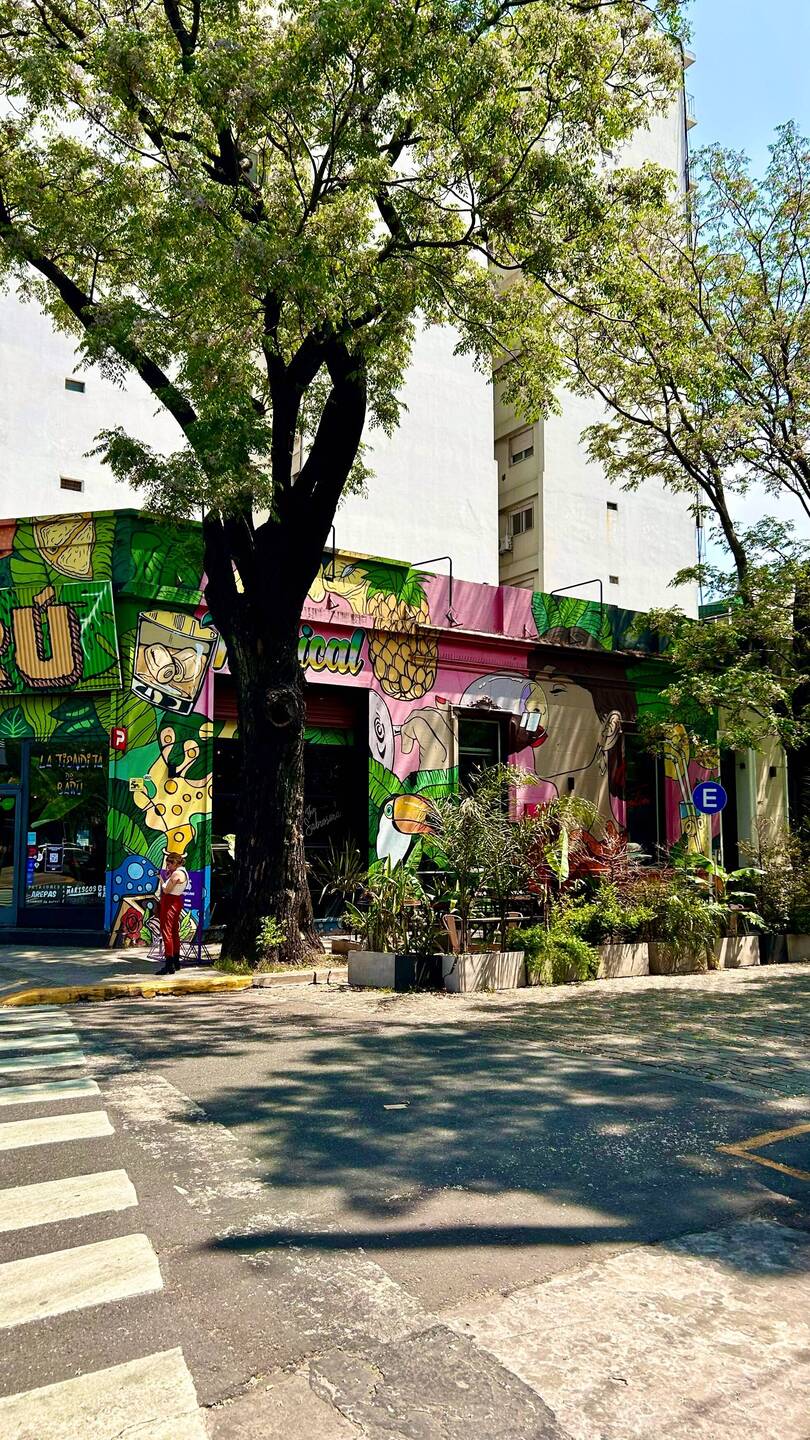
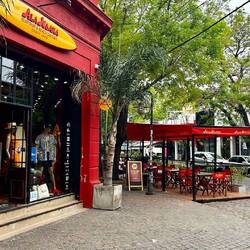
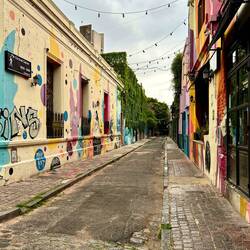
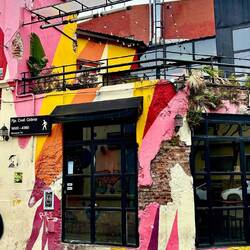
    Our apartement was located on the very edge of Palermo, the trendy and busy tourist-area of Buenos Aires. Even though the area is therefore busting with not-so-cheap eats and treats (but we‘re still talking about ~ 25% of Swiss prices, mind you 😉), it is very latinamerican regarding its presentation: Colourful, bold, artsy and a touch of shabbyness. Running around in gorgeous colourful alleys for hours, looking for good coffee? EXACTLY what we needed! 🥰
    But it‘s not only the artsy streets of Palermo that we love, it was also the overall vibe of Buenos Aires - and that it has been a while since we‘ve been in a big, clean city, surrounded by all the luxuries we are used to from Swizzy, did certainly not lower our opinion and excitement to be there. The only disappointment of Buenos Aires: the food. As you may know, Argentina is very well known for their beef (definitely not the favorite country of vegetarians and vegans) and is the 5th biggest beef exporter in the world, and therefore the city is SWARMING with so-called Parrillas (traditional argentinan grill/steakhouses), but still we did not manage to get ONE really good piece of meat out of the city 😢 and we tried a lot!! (so much that even Gilles got fed up with meat at one point - imagine that!). But we will try again, you can be sure of that!
    Apart from zhe quality of the meat and the prices, we were surprised how similar Buenos Aires seems to be to Europe, which also reflects in the inhabitants of the city: almost nobody looks very ‚latinamerican‘ (another stark contrast to Peru and Bolivia, where the Andean folks and their traditions are very visible and distinctive)! We later learned that this is due to a) the many immigrants from Italy and Spain that came to Buenos Aires/Argentina, and b) that in the past the government actively supported ‚white supremacy‘ by actively getting rid of people with darker skin (for example people with african roots and the indigenous people) and later - after too many people got aware of the governments‘ doing - by promoting interracial marriage to ‚bleach out‘ out the darker skin colours among its population… So, even though we did not get everything of Argentina‘s history as half of the museum was in Spanish only, it‘s safe to say that the country certainly has a darker past. Anyways, Buenos Aires is one of our absolute favorites so far and we can‘t wait to come back already!
    Leer más

  • El Chaltén (Patagonia Argentina)

    28 de octubre de 2023, Argentina ⋅ ⛅ 4 °C

    After our detour into luxury in Buenos Aires, it was time to prepare for our last big (pre-planned) adventure of our travels: Hiking the W- circuit in the Torres del Paine National Park in the Chilean Patagonia in mid november. Well-nourished (/full of and fed up with meat) we could not wait to slip into our hiking shoes and finally getting a glimpse of the famous landscapes of Patagonia! 😍
    We started in the argentinan part of Patagonia, mainly because we know now that Argentina is much cheaper than Chile - which was still true for the Patagonian area, but turns out everything is more expensive in Patagonia anyways 🤷🏻‍♀️. To be honest, our very first impression of Patagonia on our 3 hour drive from el Calafate airport to our first destination was a very sobering, not to say a bit shocking one: There were (still are 😕) HUNDREDS of dead Guanacos hanging in the wired fences along the roads or just lying dead behind it - whole little families at some points! We were properly shocked and we do not know until this day why there are so many dead Guanacos (may be the cold, may be they die of thirst) and - especially - why noone cares… What is clear, however, is that there‘s no shortage of Guanacos in Patagonia.
    And now, on to happier topics: Our first stop was el Chaltén, which is described as a ‚sleepy mountain village‘ (even though it is in a valley and not very mountain-y) and they certainly made sure to make it feel more mountain-y by adding lots of buildings made of wood logs etc, but as Swiss citizens, it did not do the trick for us 😂. The temperatures, however, were very mountainlike indeed: -4 to 4 degrees 🥶
    We stayed at another Airbnb for our time in el Chaltén - our first time in a tinyhouse (which definitely deserves the name 😂)! We did three out of the many hikes around the area: Loma del Pliegue Tombado, Laguna Torre and Laguna de los Tres. As you will see in the pictures of the following footprints we were (as always 🙄) not very blessed by the weather gods, but at least we were able to test our trekking gear to the very core before going to the Torres del Paine National Park - happy to say that everything passed both the cold- and the snow-tests 😉
    Our favorite hikes, however, were on non-marked trails in el Chalténs backyard: Away from all tourists and surrounded by wilderness with beautiful views on the Rio Las Vueltas and the Fitzroy. Now THAT‘S what we expected from Patagonia! 🥰
    Leer más

  • Loma del Pliegue Tumbado

    29 de octubre de 2023, Argentina ⋅ ☁️ 0 °C

    The trek to Loma del Pliegue Tumbado was 20.6 km and 1030 meters uphill, done in 5 hours with an average speed of 4.1 km/h. As we started early we were the first ones on the viewpoint (but also because one couple which walked ahead of us turned around because they could not find the trail in the snow 😅). We were lucky that it cleared up a little bit while we tried to climb the mountain peak (too much snow to go all the way up) so we could finally get the views on the lago Torres 😄 Despite the cold weather absolutely worth it!Leer más

  • Laguna Torre

    30 de octubre de 2023, Argentina

    The hike to laguna Torre was fairly easy - well-travelled 19.4 km in total with an altitude gain of 400m. It took us a bit over 4 hours to get to and back from laguna Torre (which, by the way, is the same lake we’ve seen from the viewpoint on Lomo del Pliegue Tumbado ☝🏼). Again, the views were not optimal, but at this point of time we decided that if a hike is not to our like for whatever reason, we’re just gonna make an exercise out of it 😄 Not our favorite hike ever, and with a lot more tourists than the former hike, but still a good one to get your steps in!Leer más

  • Laguna de los Tres

    1 de noviembre de 2023, Argentina

    This is the most popular hike in el Chaltén, leading to the base of the Fitzroy mountain. It’s a 24km to-and-back trail through quite amazing and varying nature. We left el Chaltén early in the morning to avoid the crowds, and especially when we made our way back to el Chaltén, we were very happy we did so: The last steep stretch up to the viewpoint was CRAWLING with people!
    The whole hike took us nearly 6 hours and was the most challenging one in el Chaltén - but only due to the last 200 (or so) very steep meters where we had to gain roughly half of the total altitude gain of 950 m 😄 For a change, we were blessed by beautiful weather this time and had the full amazing view on the Fitzroy in front and above us - what a majestic mountain! And another benefit of up going early was that we were able to see the fox which most certainly lives around the viewpoint and has very certainly discovered that tourists are a great source of easy (but certainly not very fox-suitable) food (🤬 tourists). It is so used to people that it was just chilling around a meter away from a group of young french guys and allowing everyone to take superb pictures of it - until more people started to show up and it left.
    Our conclusion: Even though without the fox and very touristy, definitely a must-do hike in el Chaltén! :)
    Leer más

  • El Calafate

    2 de noviembre de 2023, Argentina ⋅ 🌬 10 °C

    Our next stop in Argentine Patagonia was El Calafate, which is famous for a) the Perito Moreno Glacier, b) to be in proximity of Puerto Natales, the gateway to the Torres del Paine National Park (and having an airport) and c) for all its daytours to el Chaltén. As expectex, it’s a busy tourist place with all the luxuries you’d imagine it to have: A lot of Parrillas with whole lamb racks slow-cooked over a fire (and 💸), a lot of otherwise very lamb-heavy restaurants because this apparently is the thing to eat in Patagonia, and lot of bars. Luckily, our hostel was quiet and featured a beautiful and spaceous garden which in combination with the good weather that we had (now we were not hiking 🙄) was our own little refugio to come back to every day ✨🌺
    Of course we also had to visit the Perito Moreno Glacier, but as there are two more big glaciers in the (let’s call it) fjords of the beautifully turquoise waters of lake Argentina, why not see them all in one go?! So we did a ‘Gourmet Glacier Cruise’ for quite a bit of money and were - apart from the lunch, which was definitely not gourmet - not disappointed: Cruising around on a catamaran and seeing not only three amazing glaciers but also a lot of icebergs wasn’t bad at all! We were also thinking about kayaking a nearby river or doing a small glacier trek, but honestly, 200$ for 1.5 h of kayaking and 350$ for 2h on a glacier (per person)? Thanks, but no thanks! We anyways had a good time in el Calafate and it was nice to unwind for some more and really start to think about our upcoming 5-days W-circuit in Torres del Paine in some more detail - not to mention the time we spent reading in the sun in our awesome hostel garden (accomoagnied by the house cat and the typical birds of el Calafate) 🥰
    Another big plus for the hostel we’ve stayed in were the hosts: their daughter Denisse was the only one speaking some english, but all of them were super cute and helpful and even took us on a trip along the Routa 15, which is very beautiful but also passes the Monumento a los Caídos de las Huelgas Rurales. This is a memorial in memory of the 1500 rural workers that were shot and buried in (self-digged) mass graves at this place in 1921, following their protests for better working conditions - one of multiple massacres on protesting rural workers that took place between 1921 and 1922 in the Patagonian areas…
    Thank you Mamman for the tip, and now you’ve all learned a bit of history as well :)
    Leer más

  • Puerto Natales (Chilean Patagonia)

    7 de noviembre de 2023, Chile ⋅ ⛅ 8 °C

    With a couple of days to spare (and rest our feet again 😉) we crossed the borther to Chile (hello again!) for Puerto Natales. It is the closest town to the Torres del Paine National Park and therefore a hotspot for hikers wanting to explore the park - which reflects in the prices (and Chile was not cheap outside Patagonia as well 🥲). The town itself is cute, low-built, located on the Golfo Amirante Montt and supersuper windy! We spent our days resting, hunting down the last bits of equipment needed for our 5-days camping experience, and gathering the food stock we’ll need - not so easy to decide what and how much food to bring, even though we were already equipped with enough freeze-dried meals bought (for less than half the price ☝🏼) in Buenos Aires 😅 But mostly, we were waiting rather impatiently for our adventure to begin, and in the end (and despite having the very best Cazuela soup ever🤤) our stay of 3.5 days in Puerto Natales was way too long and expensive 🤷🏻‍♀️ So if you ever plan to go to Torres del Paine, make your visit to Puerto Natales a short one!Leer más

  • Day 1 Torres del Paine W-Circuit

    11 de noviembre de 2023, Chile ⋅ ☁️ 4 °C

    FINALLY the day of our big last adventure had arrived!! To say that we were excited would be and understatement, but truth being told we (or Alina at least 🙈) were also a bit worried about the weather - according to forecasts the weather was predicted to once again not be in our favour 😬 We left Puerto Natales early with our 13 and 15 kg backpacks for Pudeto, where a ferry took us to the Refugio Paine Grande. After a quick lunch we started our first trek: 11km to the Refugio Grey where we spent our first night camping. They way to Refugio Grey was nice and not too difficult (even though we really had to get used to the weight on our backs) with views of the lovely blue Lago Grey. It was the trek where we noticed the devastating impacts of the two big forest fires of 2012 and 2019 the most: dead trees everywhere 😕
    After pitching our tent (like professionals 😎) at the Refugio Grey - which, by the way, was pretty luxurious with a minimarket and hot showers etc! - at around 14:30, we did not feel like we’ve had enough steps in yet, so we went further to the small viewpoint of the Grey Glacier. Great views and 3 more kilometers on our counter! Still, after coming back and seeing it was still very early (and us not being tired at all), we went off to explore the surroundings some more until we reached the 15km mark for the first day. NOW we could rest, take a hot shower to warm up a little (Alina did - the manly Gilles thinks showers while camping are overrated 😉) and cook our dinner = boiling water 😄 for instant couscous and tomato soup as a makeshift sauce 🍽️. It was a good first day of good weather, easy exercise and having an early and relaxing night!
    Leer más

  • Day 2 Torres del Paine W-Circuit

    12 de noviembre de 2023, Chile ⋅ ⛅ 1 °C

    As the second day was the same way back that we came from - namely to Refugio Paine Grande - we decided to add some more distance by visiting the second Mirador Glacier Grey in the morning. After a delicious breakfast (oats for live!) and packing up our tent (like pros again 😎) we left our backpacks at the Refugio. Light as feathers we went up to the Mirador Glacier Grey and this one was even better than the first viewpoint, as it was much closer and allowed you to see the full extend the Glacier from above - majestic!! 😍
    After this short morning detour of ~ 7 km we made our way back to Refugio Paine Grande where we had our campsite for the second night. Even though we already knew the way from the day before and even though we were technically going downhill (Grey is higher in altitude than Paine Grande), the way back from Grey was way harder than the way to it the day before 🙃 Not sure if because our legs were a bit tired already, or because the way back had lots of quite steep uphill sections? Or maybe it was that we were almost running the whole trail, trespassing everyone except the actual trail runners on the way😂 🤷🏻‍♀️
    We anyways made it to Refugio Paine Grande safe and sound after 18.4km, and decided to call it a day and that we deserve some beers (diligently ignoring the Swiss prices 💸) after pitching our tent. We had some chats with some other hikers, cooked (=boiled water while stretching them legs 😄) for our first try of the freeze-dried meals (which were good!) and had an early night with a good and long sleep again. Who knew you can sleep well when camping? 😉
    Leer más

  • Day 3 Torres del Paine W-Circuit

    13 de noviembre de 2023, Chile

    Day 3 was the longest trek of the whole W-circuit: From the Refugio Paine Grande to Camping Francés with a ‘quick’ detour to the Mirador Britànico, a walk of 21.6 km in total. It was raining when we packed up our tent - a first for us! We still managed to leave the Refugio Paine Grande in time and made our way to the deserted Campamento Italiano, which is currently closed. After depositing our big backpacks there we decided to go up to the Britanico viewpoint despite the snow and despite the advice of the ranger not to go ‘because we will see nothing’ - good we did not listen! 😉 The way up goes through Valle Frances along the Rio de Francés and was by itself one of our favorite parts of the W-circuit 😍 Even though it was snowing (or maybe just because of it?) the views were gorgeous all around - we were even lucky enough to see a big ass avalanche coming from the Glaciar Francés (see Video)! The sky cleared up and the sun peaked out just in time when we arrived at the Mirador Britànico, allowing gorgeous views on the Pehoe lake, los Cuernos and Mount Paine Grande. What a place!!
    After getting down again (in better weather) and retrieving our backpacks, the last bit of the trail to our campsite led on mostly (mas o menos) along the superblue Lago Nordenskjöld, again with lovely views. We were warned by a girl we met at the Paine Grande that the Francés campsite is built on a hillside, but we were not prepared for how it actually was: Well spread out with quite a bit of distance to cover (after already having walked the 21.6 km 😅) to get from tents to minimarket, to the toilets, to the kitchen area and to the restaurant - everything in completely different directions 🥵 We had a pre-pitched ‘luxury tent’ at Camping Francés as the campsites were fully booked out when we planned our trip in Xx, and upon checkin in we had to follow the guy 10 minutes downhill, just to discover that he was wrong and that our tent was actually right behind the reception, so we had to carry our 13 and 15 kg backpacks all the way up again 🙄😂 Nothing beats an unexpected extra-workout 😂
    As we did not have to pitch our tent this time we had plenty of time to spare, and because we were sure that our food stock was not enough for at least one of us (*pointing to Gilles*) we decided to splurge on one of the meal options most campsites have: Salmon Pizza. It was delicious, but we are pretty sure that the hunger has biased this opinion 😉
    After a hot shower for Alina (which wasn’t that nice because the floor was made of freezing stone tiles - who does that in a camping with temperatures being more often below 10 degrees than not?!) and a second dinner of freeze-dried meals we crawled into our - indeed very luxurious, but also freaking cold because it was not throughoutly closed 🥶 - prepitched tent and had a cold but pretty good sleep on a mattress and pillows (!!).
    Leer más

  • Day 4 Torres del Paine W-Circuit

    14 de noviembre de 2023, Chile ⋅ ❄️ 1 °C

    The forth day brought us straight from Camping Francés to Camping Chileno (for our last night in the park!) in 16 km. While the weather was okay during the first part of the trek along the beautifully blue lake Nordenskjöld (with a coffe break at the super cute campsite of Cuernos, where we regretted booking Francés instead of this one) it shifted from a bit of sunshine to rain to snow very quickly - just how the Patagonian weather is supposed to act 😉 On one hand, we were a tad diasppointed to miss out on the views on the valley leading to our final campsite, but on the other hand there was SO much snow it created this beautiful and wonderfully quiet winter wonderland which made it hard to be upset about it 🥰 Also, because the last 3 km leading to the campsite were quite the ascend, we were not cold at all 😄
    The campsite itself was a nice one - tucked in at the side of the valley, the tents in between trees (on a wooden platform - a challenge that was a first for us, but luckily we were prepared and brought screws!) and a rather big restaurant where we could spend some time warming up before it was closed for the prebooked restaurant service. Again we arrived at the campsite rather early (approx. 15:30) and had quite some time to spare (in the cold 🥶) and chat with our fellow sufferers / hikers after pitching our tent. But as we planned an even earlier start than usual on our final day (sunrise here we come!), we also went to bed very early and were able to get some solid 7 hours of sleep once our tent neighbours stopped serenading the night with their snoring 😉
    Leer más

  • Day 5 Torres del Paine W-Circuit

    15 de noviembre de 2023, Chile ⋅ ☁️ -3 °C

    We purposely safed the said-to-be biggest highlight for our last day in the park (which was at the same time Gilles birthday - not just by coincidence 😉): The Mirador Torres del Paine. Even though the staff at the campside advised everyone not to go up before 9am because there was supposed to be no view earlier we did not listen - if you have the chance to see the three famous peaks with the sunrise you better do it! So we left the camp at 3:45 in darkness and made our 4.3km way up to the viewpoint. It was certainly another experience to walk through snow-frosted forests only by headlights (thinking of pumas 🙈)! As we did not have breakfast before the way was tougher than expected, but - ambitious as we are 🙃 - we still made sure to overtake the two couples which were on the go even earlier 😈 And because we did not listen to the campsite staff in the first place anyways, we also ignored the rope at the bottom of the Mirador announcing it as closed 😇
    The last bit up to the viewpoint was the most difficult because it was not only the steepest, but also full of stones of all sizes hidden beneath fresh snow and covered in ice - good for us having our the birthday boy ahead, speeding up and scouting and ‘paving’ the way for us slower hikers in the process ❤️💪🏼, with the very-well earned reward of being the very first one seeing the famous three Towers in the rising sun on his birthday 🥹❤️❤️❤️
    We spent roughly 45 minutes in the freezing cold, enjoying the great (and quite clear! take that, campsite staff!) views and having our breakfast including hot coffee and it was awesome. We even got to see the famous sight of the rising sun illuminating the towers! Together with the sight of the sunrise on our way up (and, to be completely honest, also seeing the disappointed look of all the people coming up to see the towers at 9am and hearing that the views at sunrise were great 🫢 😇), it was definitely more than worth it getting up so early 🥰
    We made our return to the camp before checkout time, wrapped our tent up one last time and had another proper breakfast before tackling the remaining 5.7 km downhill to the Torres del Paine welcome center for our shuttle bus. Going down we were doubly happy to have had the chance to see the towers by sunrise: We passed SO many dayhikers on their way up!! And, as we learned later on, many hiking the quite long and throughoutly ascenting trail couldn’t even go all the way up to the Mirador, as they closed it at around 10am due to incoming bad weather (which may or may not have been becoming bad, based on our experience with their weither prediction skills…) OR - and this was funny because we shook our head at this more than once on our way down - they tried to climb the viewepoint with normal sneakers?! 🙈😂
    We anyways arrived at the welcome center with 3.5 hours to spare 🤦🏻‍♀️, had a couple of coffees, a couple of chats with our fellow sufferers dripping in with time and just resting our feet after 5 days of walking. Interestingly, many of the people coming in after us had actually seen (and photographed) one or more pumas around the Hotel Central near the Welcome Center?! We were astonished - and rather devastated we did not get to see them, of course. Still, no pumas in full 5 days of walking inside the park and they are found near the hotel at the very entrance?! Nature is strange sometimes 🤷🏻‍♀️
    After that, we got our shuttle bus to laguna Amarga (the actual park entrance), changed for our bus back to Puerto Natales and were heavily excited for Gilles’ well-deserves birthday meal (and the birthday beers) 🍻 and an early night in a well-heated room and a comfortable big bed 😴
    Leer más