• Day 114 leaving Namibia

    April 13, 2024 in Namibia ⋅ ☁️ 15 °C

    1 of 7 Sea Days to Senegal Sailing the South Atlantic Ocean
    The Atlantic Ocean is divided in half, north to south, by the Mid Atlantic Ridge, or MAR. Longer than the Rockies, the Himalayas and the Andes combined, this underwater mountain range is the longest on Earth. Remarkably, it follows the "S' shape of the open ocean almost exactly, suggesting that, eons ago, this was the point at which the world's land masses we conjoined as the super-continent known as Pangaea. The MAR was first discovered as early as 1872, when the crew of the HMS Challenger set out to research a path for a future transatlantic telegraph cable. Sonar confirmed the ridge's existence 1925.Read more

  • Day 112 Wind Docked Cape Town

    April 12, 2024 in South Africa ⋅ ☀️ 22 °C

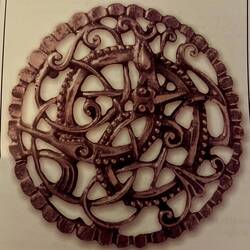
    The Urnes-Style Broochnd
    Distinctive emblem of our Viking heritage
    You may have noticed this intricately wrought design element throughout the ship, from our wine labels and notepads to the masthead of your Viking Daily and your menu covers. The motif is believed to have first been forged into a brooch by Vikings, excellent metallurgists who created a variety of jewelry.
    A brooch bearing this striking design was unearthed in a churchyard in Pitney, Somerset, England and was dated to as far back as 800 AD. It was believed that the carefully forged piece, made of copper alloy bronze, depicted a fantastical beast entwined with snakes.
    Scholars noticed an undeniable similarity between its motif and that of the wood carvings found on the doors of the 12th-century Urnes Stave Church in Norway, and so came to call the design "Urnes style." Today, the distinct look is well known for its depiction of thin, stylized animals interwoven with snakes in tight circular patterns. Their heads, typically shown in profile, are dominated by almond-shaped eyes, suggesting their wide-eyed struggle against evil.
    The churchyard brooch may have been used by a Nordic woman to fasten the drapes of her hangeroc, or
    overdress. For Viking, with its precisely curved lines and deep earthen origins, the brooch motif has come to embody the Viking spirit of innovation, discovery and exploration that we strive to emulate.
    Read more

  • Day 113 Sea Day and Namibia

    April 12, 2024 in Namibia ⋅ ☀️ 34 °C

    WALVIS BAY, NAMIBIA
    Named for the whales that lured fishing vessels to its plankton-rich waters, Walvis Bay, or "Whale Bay" in English, enjoys a deep harbor and bthe protection of the Pelican Point sand spit. The port was long valued by explorers making their way around the Cape of Good Hope, but it was the British who occupied it by 1884 and eventually incorporated it into their Cape Colony. Today, Walvis Bay is the gateway to the rich culture of Swakopmund, where German architecture recalls the settlers supported by the Kaiser. Natural beauty can be admired here: The coast is awash in golden dunes spilling over from the Namib Desert. Walvis Bay, Namibia.
    “The Namib Naukluft Park is a national park in western Namibia, situated between the coast of the Atlantic Ocean and the edge of the Great Escarpment. It encompasses part of the Namib Desert (considered the world's oldest desert), the Naukluft mountain range, and the lagoon at Sandwich Harbour.
    The region is characterised by high, isolated inselbergs and kopjes (the Afrikaans term for rocky outcrops), made up of dramatic blood-red granites, rich in feldspars and sandstone. The easternmost part of the park covers the Naukluft Mountains. More moisture comes in as a fog off the Atlantic Ocean than falls as rain, with the average of 106 millimeters of rainfall per year concentrated in February and April.
    The winds that bring in the fog are also responsible for creating the park's towering sand dunes, whose burnt orange color is a sign of their age. The orange color develops over time as iron in the sand is oxidized, like rusty metal; the older the dune, the brighter the color. These dunes are the tallest in the world, in places rising more than 300 meters (almost 1000 feet) above the desert floor. The dunes taper off near the coast, and lagoons, wetlands, and mudflats located along the shore attract hundreds of thousands of birds.
    'Namib' means "open space", and the Namib Desert gave its name to form Namibia – "land of open spaces". We arrived in walvis Bay, Namibia at 2:00 pm and we lined up to go into the Star Theater at 2:30 and were not the first to clear customs. We waited for Heather and were interviewed by Namibia TV. We were greeted by local dancers at the port and boarded an off road vehicle for our sunset excursion in the desert. We stopped at the Goanikontes-Oasis and walked around for a time seeing their set up including a children’s petting zoo, play ground, etc. The we continued our adventure to the spot we were entertained by dancers, percussion band and singing. Our cruise director danced with the locals and we climbed to the top of the hills for the best pictures of the area. Were served cheese and crackers and wine and beer before returning to the ship for dinner. Namibia was so clean and had lovely housing near the Port and along the road ways.
    Read more

  • Day 111 Dock Cape Town

    April 11, 2024 in South Africa ⋅ ☀️ 22 °C

    A Convergence of Oceans
    Jutting into the ocean from the Cape of Good Hope, Cape Point is often demarcated as the meeting point of the Atlantic and Indian Oceans. But another rocky headland in South Africa lies even farther south on the continent, and according to the International Hydrographic Organization, the international agency that sets standards of surveying and nautical charting, the oceans converge here, at Cape Agulhas.
    Identifying an invisible border between oceans might seem arbitrary. But to hydrologists, the line is quite detectable. Here, the warmer waters of the Indian Ocean's Agulhas current and the colder waters of the Atlantic's Benguela current converge. One way to imagine this confluence is to think of the cold water as a shield that turns the warm water back on itself. Of course, this is a simplistic way of describing a complex exchange in which the currents do in fact mingle with each other. The complex give-and-take relationship between the oceans is illustrated further by the tendency of the line to shift seasonally-often as far west as Cape Point. Of course, this latter point might make any layperson believe that the border between oceans is, well, fluid.
    But there is more to consider. Vast underwater forests
    of a cold-water species of kelp stretch east all the way from Cape Point, ending rather abruptly at Cape Agulhas, thus proving the latter as the easternmost reach of the Atlantic and the westernmost of the Indian Ocean. And so it is that, rather surprisingly, seaweed provides the final assessment.
    Due to 25 mph winds we are stuck in our slip and we were not allowed to get off the ship. We had lunch with Heather and Jon and watched Barbie after dinner.
    Read more

  • Day 110 Cape Town - City Tour

    April 10, 2024 in South Africa ⋅ ☁️ 17 °C

    CAPE TOWN, SOUTH AFRICA
    Cape Town enjoys one of the world's most picturesque settings at the foot of the iconic Table Mountain. The cosmopolitan city is the gateway to dramatic coastal splendor, a thriving wine country and a rich array of cultural venues that embody the spirit of the "Rainbow Nation." The city's heritage took root in Company's Garden, where 17th-century European settlers grew food to stock ships rounding the cape. In and around the celebrated Victoria & Alfred waterfront, historic architecture an delicious cuisine reflect an array of African, Dutch, English, and Malay influences. We took a bus ride along the wild beauty of the Cape Peninsula. We toured the Atlantic seaboard to Camps Bay and toward Hout Bay's small historic fishing village. We stopped for pictures along the beautiful beaches. The water is super cold considering the proximity to Antarctica and the ocean currents. Then, drive through the scenic Chapman's Peak Drive and proceed to the Central Garden. Table Mountain closed due to wind and clouds.Read more

  • Day 108 - Port Elizabeth was aborted

    April 10, 2024 in South Africa ⋅ ☀️ 17 °C

    GQEBERHA (PORT ELIZABETH), SOUTH AFRICA
    Previously called Port Elizabeth, the city's name was changed in 2021 to the Xhosa and Southern Khoe name for the Baakens River that flows through the city. Along with the surrounding towns and townships, Geberha forms part of Nelson Mandela Bay Municipality. Its urban coastline is dotted with picturesque, Blue Flag beaches which are popular hotspots for locals and visitors alike. In addition, the city serves as a gateway to the Eastern Cape's wildlife and great outdoors, including safari adventures to witness the "Big 5" game species.Read more

  • Sea Day 109 - to Capetown, South Africa

    April 10, 2024, Indian Ocean ⋅ 🌬 18 °C

    Civilization was built on salt and, therefore, on the sea.
    This is a bold statement, but without salt, humans would not have been able to preserve meat, fish and seasonal food for storage or transport, a practice that dates at least as far back as the 1st century BC. Salt was also used to render the land of conquered enemies useless. So coveted was the mineral by communities, explorers and armies that it was regarded in the same way we regard currency today. In fact, the word "salary" is derived from sal, the Latin word for salt.
    Italy's Via Salaria is just one of the many roads built to ease the transport of salt from the sea to the great cities of empires. Along coasts all over the ancient world, salterns extracted the mineral very simply through evaporation, a process that worked best in warm and dry climates. In the Roman Empire, ceramic vessels with narrow necks were used to hasten the process over an open flame. When the water was boiled away, workers broke the vases to get to the salt. Later, some cultures left shallow pans in the sun, letting the water evaporate in its own time.
    Traditional salt farms still exist all over the world. Large pans or reservoirs separated by levees are sculpted into the sands, creating an enormous shimmering
    patchwork. Like millennia before, the water is simply left to evaporate, then collected for processing before finding its way to your dining table.
    Read more

  • Sea Day 107, S. Africa

    April 7, 2024, Indian Ocean ⋅ 🌬 21 °C

    The Wonders of Kelp
    With a long history entwined with humankind and a profound potential as a renewable energy source, kelp and other seaweeds may be the most underappreciated plant life on the planet. Stone Age man harvested mussels and other shellfish off the kelp that grew off the shores of today's South Africa. Scholars further believe that kelp forests have flourished around the coasts of the Pacific Rim for some 12,000 years, attracting a huge diversity of marine life close to shore, from turtles to mollusks. Humans were at the top of this food chain and followed the fish-and the kelp—in a millennia-long migration from Northeast Asia to the Americas.
    Much later in the 1800s, Scottish Highlanders harvested, dried and burned kelp to produce soda ash, known today as sodium carbonate, still used as a water softener today. During World War I, countries from the United States to France used it to manufacture gunpowder. In addition, some kelp is processed into alginate, a thickening carbohydrate used in ice cream, jelly and toothpaste.
    But the most beneficial use of kelp is just being uncovered. Some Scandinavian countries such as Sweden are harvesting vast amounts of the plant from their long-established kelp farms and working to convert
    its methane and sugar into bio-fuel for automobiles. Over time, massive open-ocean farms could be planted to provide a source of clean energy. And with kelp's staggering growth rate— up to two feet per day —the fuel supply could be infinite.
    Read more

  • Day 106 - Richards Bay / Durban

    April 6, 2024 in South Africa ⋅ ☁️ 22 °C

    We wanted to go out today in search of exotic African wildlife on a game drive through one of Africa's oldest nature preserves. The Hluhluwe-iMfolozi Park which has more than 8,8000 sq mi, the park is a sanctuary for the wildlife of Zululand, including its small population of rare white rhinos, however, the seas were not favorable so we are went on to Durban, however weather winds and seas were not favorable in Durban either… 🙄. Durban means "bay, lagoon" and it is the third-most populous city in South Africa, after Johannesburg and Cape Town, and the largest city in the province of KwaZulu-Natal. Durban is on the east coast of South Africa, on the Natal Bay of the Indian Ocean, Durban is South Africa's busiest port and was formerly named Port Natal. North of the harbor and city centre lies the mouth of the Umgeni River; the flat city center rises to the hills of the Berea on the west; and to the south, running along the coast, is the Bluff. Durban is the seat of the larger eThekwini Metropolitan Municipality, which spans an area of 987 sq miles, and had a population of 4.2 million in 2022, making the metropolitan population one of Africa's largest on the Indian Ocean. The city has a humid subtropical climate, with hot, wet summers and mild, dry winters. Too bad we missed it and are off to our next stop - Port ElizabethRead more

  • Sea Day 105

    April 6, 2024, Indian Ocean ⋅ ☀️ 26 °C

    Exuding romance and mystery, the Indian Ocean has inspired some of the world's most beloved literature.
    Here, we offer a brief timeline of notable titles and authors whose lyricism has been influenced by these historic waters.
    • 1572: Os Lusíadas, Luís Vaz de Camões (1524-1580). A true epic of the Indian Ocean, this long-form, Homeric-style poem is often cited as the most important work of Portuguese literature, a lyrical celebration of Vasco da Gama's discovery of a sea passage to India.
    17th-18th centuries: The Seven Voyages of Sinbad the Sailor, Author unknown. Based on the seafaring experiences of merchants sailing to the East Indies and China, these beloved stories infuse the miraculous and fantastical as the hero sails waters east of Africa and south of Asia.
    • 1897: Following the Equator, Mark Twain (1835-1910). In this little-known travelogue, the American writer exalts the "vast solitudes of the Indian Ocean." Twain made the crossing during a world tour and called it "17 days of heaven" amid the
    "peace of the great deep."
    • 1940: Sons of Sinbad, Alan Villiers (1903-1982). In the 1930s, convinced that the Age of Sail was coming to an end, Villiers joined the crew of an Arab dhow for a voyage along the monsoon winds east of Africa. This great maritime classic chronicles his experience.
    • 2008-2015: The Ibis Trilogy, Amitav Ghosh (1956). This acclaimed work of historical fiction-Sea of Poppies, R and Flood of Fire-unfolds during the early 19th century as India and China trade opium. The trilogy is named for the ship on which the main characters meet.
    Read more

  • Sea Day to Africa - Day 104

    April 5, 2024, Indian Ocean ⋅ ⛅ 25 °C

    Vasco da Gama’s Epic Crossing
    On a mission to broaden the spice trade and build the Portuguese king's empire, Vasco da Gama (c. 14605-
    1524) sailed into the uncharted open waters of the Indian Ocean. With monsoon winds at his back to hasten the crossing, he arrived in India in 1498. In doing so, he and his crew were the first to link Europe and Asia via an ocean route, thus avoiding the contested waters of the Mediterranean Sea and the treacherous overland route of the Arabian Peninsula. Da Gama's voyage had been the longest ever achieved, and is still viewed as one of history's most courageous and ambitious journeys.
    Under the sponsorship of King Manuel | (1469-1521), some 170 men accompanied da Gama to establish the trade of spices with the East. Of their four ships, two were specifically constructed for the expedition, a pair of square-rigged ships with shallow droughts. Da Gama captained the flagship St. Gabriel. Sailing charts created during previous expeditions acted as signposts along the African coast; once those shores disappeared from view, astrolabes, solar observation and the revered astronomical tables of the Royal Astronomer Abraham Zacuto (1452-1515) led the way.
    In 1498, upon landing near Calicut, da Gama sat with the Hindu king for a traditional exchange of gifts. Though the monarch scorned Portugal's offerings, theirs was a trade
    ng that would forever change the economic landscape of Europe, opening more trade, expanding empires and enriching ckets of kings and merchants.
    Read more

  • Sea Day 103

    April 4, 2024, Indian Ocean ⋅ 🌬 26 °C

    SAIL THE INDIAN OCEAN
    The ancient history of human movement and migration across the Indian Ocean can be tied to its ancient history of animals and food. Though it is not clear to scholars exactly how, five crops endemic to Africa (hyacinth bean, cowpea, finger millet, pearl millet and sorghum) crossed these waters around 2000 BC and were eventually cultivated in India's Gujarat region. Sometime during the same period, chickens, zebu cattle and broomcorn millet were loaded onto ships in Central Asia bound for Africa, followed by bananas around 1000 BC. Black pepper and sesame made similar journeys, soon to be planted in the Nile-fed soils of Egypt. It is easy to imagine that all of these goods were transported for trade; however, the black rat and the house mouse —which also made the crossing to Egypt-likely made the journey asRead more

  • Dehli to Neptune. Day 101

    April 1, 2024 in India ⋅ ☁️ 31 °C

    Deli - tour if Old and New Deli
    We went to the Red Fort and Jana Masjid. We had an amazing experience riding through Chandni Chowk. We went to Raj Ghat where Mahatma Gandhi was cremated in 1948. We visited the Presidential Palace, the Rashtrapati Bhavan and the World War II memorial arch and Indian Gate.
    After lunch we went to the Qutub Minar, 72 meter high Minaret. Dinner at the Le Méridien - Delhi.
    Read more

  • Taj Mahal. Day 100

    March 31, 2024 in India ⋅ ☀️ 37 °C

    After a wake up call at 4:30 am we then assembled in the lobby for the drive to Taj Mahal -
    we again boarded the battery buses and proceeded to Taj Mahal - we lined up to enter for the sunrise views, while waiting in line we enjoyed the group of monkeys in the roofs of the shops lining the street. This time theTaj Mahal- lines were much longer, and the lines were not just locals. We did not go to the front of the line this morning.
    It was worth getting up at 3:30 am… it is the most beautiful building in the world. We went back to the Jaypee Palace Hotel for another great Indian buffet breakfast. Then we assembled in the lobby for the Drive to Fatehpur Sikri. We Arrive at the coach parking area for a short walk to board your special buses to transfer you to the main Fatehpur Sikri monument. Our same guided took us through Fatehpur Sikri - he was very knowledge.
    We walked to re-board the special buses and return to the coach parking area and drove
    back to Jaypee Palace Hotel in Agra had a buffet lunch at Jaypee Palace Hotel and departed Agra for Delhi by coach. Heather, Marie, Susan, Angelo (Aussies) and Dennis and I sat in the back of the bus with each of us in our own seats for the 4 hour drive. We arrived at Le Meridien Delhi and checked-in. The security is intense in India and our luggage was again screened and we passed through metal detectors before entering the hotel. We had other great Indian Buffet Dinner at Le Meridien Dehli.
    Read more

  • Day 99 Jaypee Palace Hotel Agra - sunset

    March 30, 2024 in India ⋅ ☀️ 38 °C

    We had Buffet breakfast at Le Meridien Dehli
    (The food was amazing and delicious) Dosa for breakfast - the best! We assembled in the lobby after checking out. We assumed our back if the bus location with each of our crew having our own seats for the 4 hour trip to Agra where again had our luggage screened for security reasons. It is extremely tight in India. We had another amazing Indian buffet lunch at Jaypee Palace Hotel, following our check-in we went to Agra Fort with our tour guide (Anwar - for the next few days) to Agra Fort Drive and the sunset at the Taj Mahal. Once we arrived at the parking lot we boarded our battery buses (required to preserve the Taj Mahal) and proceed to Taj Mahal. It was spectacular to say the least. After our visit to Taj Mahal we returned to Jaypee Palace Hotel
    And had a performance of a Kathak dance at Jaypee Palace Hotel followed by buffet dinner
    Read more

  • Day 98 Le Maridien, Delhi

    March 29, 2024 in India ⋅ ☁️ 35 °C

    We got up at 4:30 am and checked out of the Crown Plaza and bordered our bus at 5:45- Purple 1 to travel to the Cochin Airport. We traveled from Cochin to Delhi on indigo Airlines - no GF food. The Kochi Airport is an amazing place, totally solar powered (1st in the world) with the only nursery in the world to surround an airport. Very eco friendly. The state Kerela is Communist and has a 98% literacy rate, the best in India. It is also called the spice coast as all the best spices in the world are from here. The Indian security is stringent at the airport, and our quiet boxes were a cause for delay. We were told to take them along with our chargers by the ship. The guide has the transmitter and we each have a receiver that we can tune our corresponding bus number so we can hear the tour guide. We are on the same bus with Heather, Marie, Sue and Angelo and we sit in the back of the bus with each of us having our own seats. Heather and Jon (Canadian) are in a different bus, (there are at least 5 buses with 163 Neptunian’s on the tour to the Taj Mahal), but we are in the same hotel and will take our meals together in the coming days.Read more

  • Day 97 - Kumbalangi Village

    March 28, 2024 in India ⋅ ⛅ 32 °C

    Breakfast at The Crowne Plaza
    And we went to Kumbalangi Village excursion we walk to the jetty to board local canoes and cruise towards Kumbalang Village. Enroute view a few fishing nets. Enjoy a short canoe ride to the island Disembark and walk through the village to view the climb up the coconut palm to toddy tap from the coconut tree (amazing- ferments in 4 hours), crab farm, clam processing and ripe making from the coconut fibers.
    We Board Tuk-Tuks for a short ride to the coach parking
    Board your coach and return to your hotel. A nature walk and pottery making in a non motorized pottery wheel. Palm leave weaving. Net throwing to fish, tastes an unusual green sour fruit that was said to be an aphrodisiac. Nothing of the palm tree goes to waste. Furniture is made from the roots. Kids toys, pinwheels, origami out of the green leaves, roofs, weaved from the green patch roofs and brooms from the dried leaves strips, simply amazing.
    Dinner at The Crowne Plaza
    Read more

  • Cochin - Day 96 Crowne Plaza Hotel

    March 27, 2024 in India ⋅ ☀️ 34 °C

    Thursday. https://www.keralaayurveda.us We had an amazing day at the Ayurvedic hospital/spa/restaurant and manufacturing plant. $.65 for sinus medication … Immediately following our tour we had to get our bags and board the bus to Fort Kochin, old Dutch Fort where they set up their trading post. We toured to see Chinese Fishing nets and then to the Crown Plaza Hotel for an overnight, and more tours in Cochin tomorrow. The Taj Mahal is closed on Fridays.Read more

  • Sea day 95 to Cochin

    March 26, 2024, Gulf of Mannar ⋅ ☀️ 29 °C

    SAIL THE LACCADIVE SEA
    The warm waters of the Laccadive Sea stretch between the island-nations of Sri Lanka and the Maldives at the tip India's southern point. Long a gateway for explorers sailing from the Indian Ocean to the Bay of Bengal, the sea's shallower waters, particularly in the Gulf of Mannar, have been known for their pearl banks for 2,000 years, praise Roman philosopher Pliny the Elder for their prolific harvest. Today, it remains a popular region for pearl fishing. Or the richest marine environments in the world also thrives here, harboring some 3,600 species of flora and fauna. L swaths of its waters, islands and coasts are protected as a UNESCO Biosphere Reserve.Read more

  • Sri Lanka Day 93

    March 24, 2024 in Sri Lanka ⋅ ⛅ 30 °C

    Colombo, Sir Lanka is situated on the west coast of the island, just south of the Kelani River, Colombo is a principal port on the Indian Ocean. It has one of the largest artificial harbours in the world and handles the majority of Sri Lanka’s foreign trade.
    The earliest written mention of the port may be that of Faxian, a Chinese traveler of the 5th century CE who referred to the port as Gaolanbu. The Sinhalese called the port Kolamba, which the Portuguese thought was derived from the Sinhalese word for mango trees (kola, “leaves,” and amba, “mango”). A more likely explanation is that kolamba was an old Sinhalese word meaning “port” or “ferry.”
    Read more

  • 2nd Sea Day to Sri Lanki - Day 92

    March 22, 2024, Bay of Bengal ⋅ ☁️ 28 °C

    The Origin of Oceans and Seas
    Often, oceans and seas are named after their adjacent lands or after the Europeans who discovered them. But sometimes the origins of a name reveal a bit about a region's culture or history. Here are a few examples:
    Pacific Ocean: During his circumnavigation of the world in 1521, Ferdinand Magellan discovered favorable winds as he sailed between South America and the East Indies, so he called these waters Mar Pacifico, or "Peaceful Sea."
    Atlantic Ocean: The origins of the Atlantic's name date to antiquity, around 450 BC. To the Greeks, Atlantis thalassa, or the Sea of Atlantis, comprised the uncharted and mysterious waters "beyond the pillars of Heracles," where Iberia's Rock of Gibraltar and Africa's Monte Hacho marked the end of the known world.
    Mediterranean Sea: The semi-enclosed body of water between Europe and Africa has had many names. It was Mare Nostrum ("Our Sea") to the
    the Greeks. The modern name is from the Latin mediterraneus, meaning "amid the earth."
    Roman Empire and Mare Magnum ("Great Sea") to
    South China Sea, East China Sea: In ancient Chinese literature, the empire was surrounded by four seas, each named for the directions on a compass. In the real world, as the Portuguese developed trade with China in the 16th century, they called these waters Mare da China ("China Sea") and later distinguished the two bodies of water with their own names.
    Arafura Sea: Explorers in the 18th century told of the Harafora people of the Moluccas and named this sea for them.
    Read more

  • 1st Sea Day Sri Lanka - Day 91

    March 21, 2024, Bay of Bengal ⋅ 🌙 30 °C

    BAY Of BENGAL
    The largest bay in the world, the history-rich waters of the Bay of Bengal are considered sacred by many Hindus. In ancient Hindu lore, the bay is called Mahodadhi, or "great water receptacle." Still today, the devout perform a daily aarti, a religious ritual in which they place fire offerings into the surf and let the tides carry them away. The course of history was changed in these waters in the early 1600s, when galleons of the British East India Company sailed along the coast, settled throughout India and built a trading company that accounted for half the world's maritime commerce in goods such as cotton, silk, indigo dye and tea.Read more

  • Phuket - Day 90

    March 21, 2024 in Malaysia ⋅ ☀️ 33 °C

    PHUKET, THAILAND
    Often called the "Pearl of the Andaman Sea," the Thai island of Phuket offers more than picturesque beaches and sweeping vistas of sparkling azure water and emerald-green hills. The island was long a major stop on trade routes between India and China, often mentioned in ship logs of European sailors. Around 1545, one Portuguese explorer called the island Junk Ceylon, and the name stuck for decades. Later, the French, Dutch and English competed for the island's tin trade. The French East India Company won, following which the French played a major role in local politics until they were expelled in 1688. Today, old Sino-Portuguese shop-houses and monuments to Buddha dot the island.Read more

  • George Town Day 89

    March 20, 2024 in Malaysia ⋅ ⛅ 33 °C

    Capital of the Malaysian island of Penang, George Town has long been a crossroads. Resting on the Strait of Malacca, it served as an important port on the prosperous trade routes between Madras and Canton. Today, it is a glorious celebration of culture, one of Asia's most colorful corners. Malays, Indians and Chinese all share a past here, as a ride around town via a pedaled trishaw. George Town's unique cityscape features shops from colonial days, Buddhist and Taoist temples and kongsi, brightly painted clanhouses that traditionally open their doors to all who share a surname. We explored the melting pot of cultures that have helped create Malaysia's oldest city. George Town is where East meets West and old meets new, with an intriguing blend of British and Southeast Asian influences. We took on a tour by motor coach through the city. Mohamed didn’t explain much about how George Town developed as a trading post in the 18th century. We didn’t even slow the bus to see England at Downing Street-which, as in London, was once a seat of government and the poorly maintained whitewashed facade of St. George's Church. We walked through the old dirty city center, a UNESCO World Heritage Site, and viewed the faded sad bicycle street art, (we have seen better graffiti) and quickly drove past Kek Lok Si, the largest Buddhist temple in Malaysia, and the eye-catching State Mosque. We passed the sacred Hindu Waterfall Hill Temple, Botanical Gardens and Fort Cornwallis en route to your ship. Mohamed needs more time in seat to make a passable tour guide.Read more

  • Kuala Lumpur - Day 87

    March 18, 2024 in Singapore ⋅ ☀️ 34 °C

    With only 1 day we did our best to enjoy the delightful contrasts, of one of the most vibrant metropolises in Asia. We went to the National Museum, a fascinating collection that chronicles the nation's past from prehistory through the Malacca Sultanate, colonial era and present day. We also visited the National Monument, a huge bronze monument built in tribute to the valiant soldiers who gave their lives during the Communist Insurgency of the 1950s. We stopped at the elegant, historic 1910 Kuala Lumpur Railway Station and the National Mosque of Malaysia. In Merdeka Square (Independence Square), we admired the wide cricket green and the British-style Sultan Abdul Samad Building. Also we drove through the Golden Triangle, the city's entertainment district, before stopping to gaze up at the soaring Petronas Towers, resembling a pair of steel-clad rocket ships linked by a towering catwalk. This architectural wonder is the pride of Malaysia and can be seen on tourist sites.

    KUALA LUMPUR (PORT KLANG), MALAYSIA
    The lively capital of Malaysia, Kuala Lumpur was built by Chinese tin prospectors in the mid-1800s. They had come here in search of a fortune, and found it by clearing wide swaths of jungle for a new mining town. Since then, the city of KL, as the locals call it, has grown into a stunning mix of colonial, Moorish, Tudor, neo-Gothic and Grecian-Spanish architecture. The two-story shop-houses of Old Market Square, with storefronts below and residences above, reveal the lives of merchants. The magnificent Petronas Towers are the centerpiece of this fascinating city; the side-by-side twin spires resemble a pair of rockets, connected by a two-story sky bridge that spans the 41st and 42nd floors. B ‘n
    Read more

Get your own travel profile

Free

QR code

FindPenguins for iOSFindPenguins for Android