• We are Living the Dream
  • We are Living the Dream

Europe 2016

Et 53-dagers eventyr av We are Living the Dream Les mer
  • Belogradchik

    4. juli 2016, Bulgaria ⋅ ⛅ 19 °C

    The countryside is pretty driving through the fields of sun flowers along the highway. We are driving towards Belogradchik a little town in the foothills of the Balkan mountains not far from the Serbian border.Les mer

  • Belogradchik Fortress

    4. juli 2016, Bulgaria ⋅ ⛅ 19 °C

    The Romans initially founded Belogradchik Fortress as a stronghold from the 1st to the 3rd centuries AD, building the highest part of the fortress known as the Citadel. The mission of the fortress was to control the road from the town of Ratsiaria. Over the centuries, Belogradchik Fortress has been used by a succession of different forces including the Byzantines.

    The 14th century saw the site fall under the remit of Tsar Ivan Sratsimir’s Vidin kingdom, during which time it was enlarged and strengthened. Nevertheless, at the end of this century, Belogradchik Fortress was captured by the Ottomans, a move which saw the site used to suppress local uprisings and protect this corner of the Ottoman Empire.

    During the 19th century, Belogradchik Fortress continued to be used for military and defensive purposes. In 1850, Belogradchik Fortress played a sinister role in suppressing the Belogradchik uprising, it being the place where activists were decapitated. In 1885, the fortress was also used in the Serb-Bulgarian War.
    Les mer

  • Belogradchik Rockformations

    4. juli 2016, Bulgaria ⋅ 21 °C

    Now to climb 150 steps to view some incredible rock formations.

    The Belogradchik Rocks are a group of strange shaped sandstone and conglomerate rock formations located on the western slopes of the Balkan Mountains near the town of Belogradchik in northwest Bulgaria. The rocks vary in colour from red to yellow, some of the rocks reach up to 200 m in height. Many rocks have fantastic shapes and are associated with interesting legends. They are often named for people or objects they are thought to resemble. The Belogradchik Rocks have been declared a Natural Landmark by the Bulgarian government and are a major tourist attraction in the region.

    It was so windy and the views are incredible.
    Les mer

  • Baba Vida

    4. juli 2016, Bulgaria ⋅ 28 °C

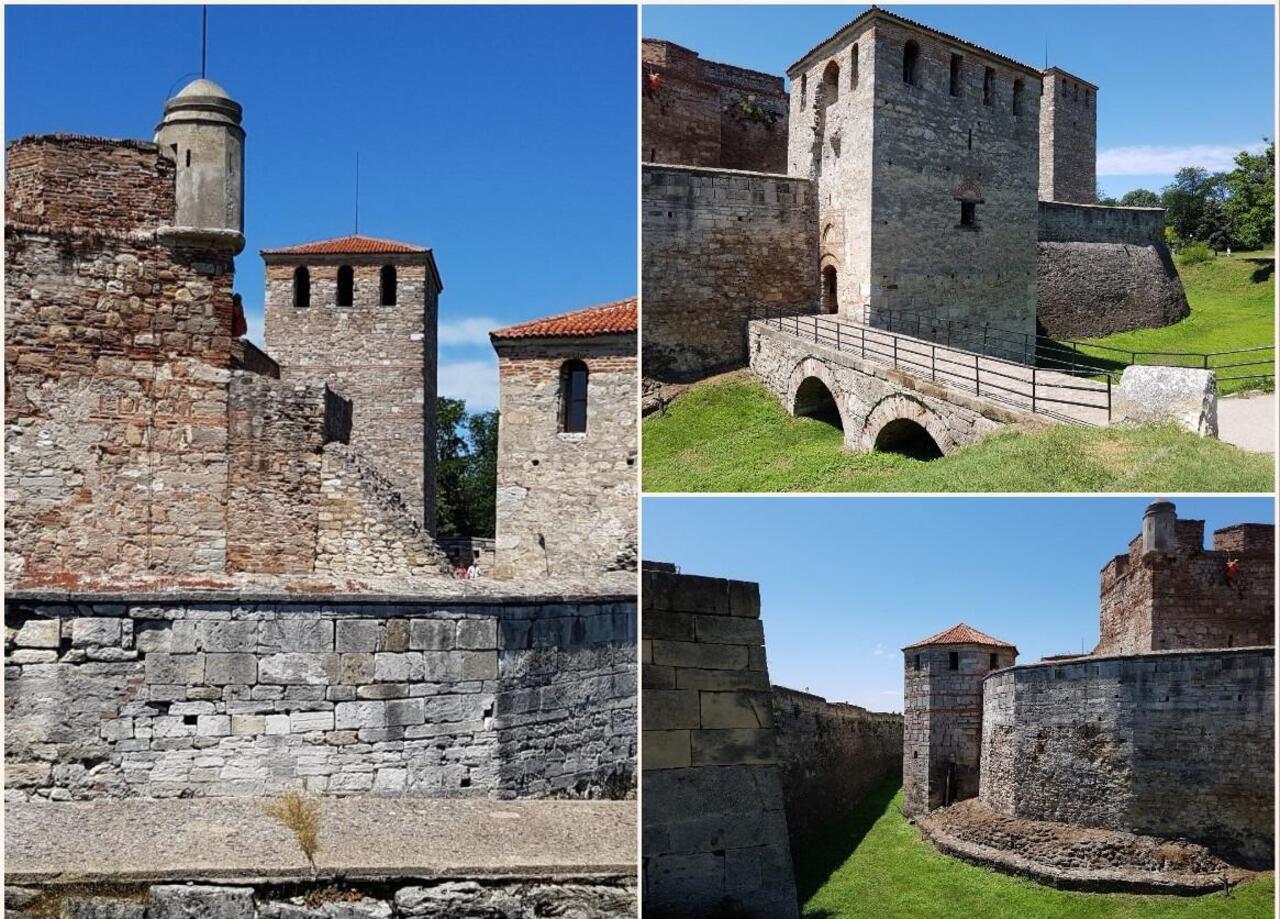
    Back on the bus and heading back towards Vidin to walk around Baba Vida which is a medieval fortress in Vidin in northwestern Bulgaria. It consists of two concentric curtain walls and nine towers of which three are preserved to their full medieval height, including the original battlements, and is said to be the only entirely preserved medieval castle in the country.Les mer

  • Baba Vida

    4. juli 2016, Bulgaria ⋅ 28 °C

    The construction of the fortress began in the 10th century. Baba Vida served as Vidin's main defensive installation during the course of the Middle Ages and acted as the most important fortress of north western Bulgaria. The Baba Vida stronghold stood an eight month long siege by Byzantine forces led by Basil II, but was destroyed and once again erected during the rule of Ivan Stratsimir. Between 1365 and 1369, the fortress was in Hungarian hands. Vidin was suddenly attacked by the forces of Louis I of Hungary, but it took several months to conquer Baba Vida. In 1369, Ivan Stratsimir managed to regain control of his capital, albeit having to remain under Hungarian over lordship. In 1388, the Ottomans invaded Stratsimir's lands and in 1396 Stratsimir joined an anti-Ottoman crusade led by the King of Hungary. The crusade ended in the disastrous Battle of Nicopolis at Nikopol, Bulgaria, with the Ottomans capturing most of Stratsimir's land in 1397.

    The fortress played a role during the Ottoman rule of Bulgaria, serving as a weapon warehouse and a prison, also as residence for Osman Pazvantoglu, as it has been no longer used for defensive purposes since the end of the 18th century.

    Today, Baba Vida castle functions as a museum. Being a popular tourist attraction, the fortress is being kept in repair.
    Les mer

  • Rousse

    5. juli 2016, Bulgaria ⋅ ⛅ 25 °C

    This trip just keeps showing us new things. Whilst this is an other ex communist city it does have a bit more character about it. The main city still has the horrible buildings but Rousse is not as depressing.

    Present day Rousse is the fifth largest Bulgarian city and is an important economic, financial and cultural hub and is located on the South bank of the Danube. It is sometimes called Little Vienna. Nothing so far makes me think of Vienna.
    Les mer

  • Arbanasi

    5. juli 2016, Bulgaria ⋅ ⛅ 21 °C

    Today was a bus ride out of town to visit 2 churches, they were different to the others as they had all the walls painted which represent stores and the pages of the bible.

    Arbanasi is a village in Veliko Tarnovo Province of central northern Bulgaria. It is known for the rich history and large number of historical monuments, such as 17th and 18th-century churches and examples of Bulgarian National Revival architecture, which have turned it into a popular tourist destination.

    The village's name comes from the word Arbanas. This is how Slavic people referred to the people living in what is present day Albania. However, the village did not have any Albanian's living there at the time.

    The second church did not have the character of the first but still interesting as it was built into the ground.
    Les mer

  • Traditional House

    5. juli 2016, Bulgaria ⋅ ⛅ 24 °C

    This traditional Turkish house was built by a local family to live in the 1600's and was really interesting. I also realised I did not really have anything to cover my head for later in the trip and the house had a gift store with some beautiful head scarves so I am ready for when we get to Turkey.Les mer

  • Bulgarian Rose Oil

    5. juli 2016, Bulgaria ⋅ ⛅ 24 °C

    Bulgaria supplies rose products to many places around the world and you can smell rose oil in the streets here and yes I did purchase some for myself, Melissa and Hilda but it is very expensive as it is 100% real rose oil and smells divine.Les mer

  • Veliko Taranovo

    5. juli 2016, Bulgaria ⋅ ☀️ 25 °C

    This is a medieval town with fortified walls and cobbled lanes where we walked up and down stairs ,wandered the tiny streets and visited lots of market stalls in one of Bulgaria’s oldest towns. The modern town is bursting at its seams as today it has Bulgaria’s second largest university and is home to a multicultural expat scene.Les mer

  • Disembarkation River Duchess

    6. juli 2016, Romania ⋅ ⛅ 25 °C

    Today we disembacked from the River Duchess to start the land part of the holiday. We are still with people from the cruise for a few more days but staying in Hotels rather than the ship.

    The morning started with a city tour around Bucharest before checking into our Hotel.

    Bucharest is the capital and largest city of Romania, as well as its cultural, industrial, and financial centre. It is located in the southeast of the country on the banks of the Dâmbovița River, less than 60 km north of the Danube River and the Bulgarian border.

    Bucharest was first mentioned in documents in 1459. It became the capital of Romania in 1862 and is the centre of Romanian media, culture, and art. Its architecture is a mix of neo-classical, Bauhaus and art deco, communist-era and modern. In the period between the two World Wars, the city's elegant architecture and the sophistication of its elite earned Bucharest the nickname of "Little Paris" Although buildings and districts in the historic city centre were heavily damaged or destroyed by war, earthquakes many survived. In recent years, the city has been experiencing an economic and cultural boom.
    Les mer

  • Bucharest

    6. juli 2016, Romania ⋅ ⛅ 23 °C

    There are some lovely buildings in Bucharest which were not destroyed from its turbulent history. Some buildings are even being restored to reflect the elegant French influenced buildings of the 1500's.Les mer

  • Radisson Blu Hotel

    6. juli 2016, Romania ⋅ ⛅ 26 °C

    Checked into the Radisson Blu then headed out for lunch. We had an authentic Romanian lunch in the old town quarter before coming back for a swim in the Hotel pool. First glance it appeared to be a great Hotel but the service is dreadful. It was a lovely change to do nothing for the afternoon but swim, sunbake and read which I have hardly done any of.

    .
    Les mer

  • Snagov Monastry

    7. juli 2016, Romania ⋅ ⛅ 20 °C

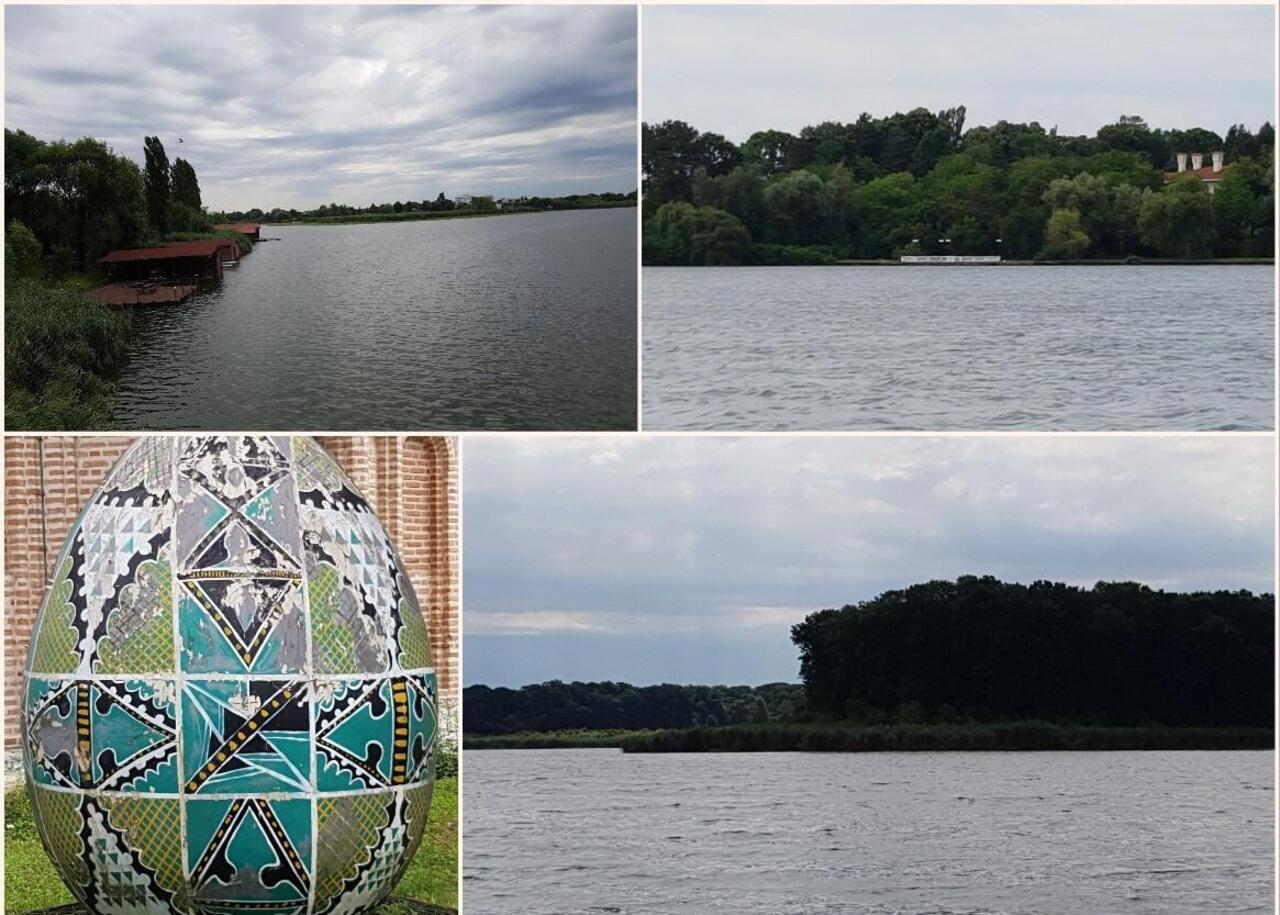
    Today we went on a country side tour to Snagov Monastery where Vlad the Impaler is meant to be buried. The monastery is on a tiny island in a lake just outside of Bucharest, which local tradition states is the burial place of Vlad the Impaler, the inspiration for Bram Stoker’s Dracula.Les mer

  • Snagov Monastery

    7. juli 2016, Romania ⋅ ⛅ 20 °C

    Originally founded in the 14th century and later excavated in 1933, the monastery is a seemingly simple place of worship taking advantage of the calm its water-locked isolation brings. However, the story goes that after his notoriously cruel lifetime, Vlad Tepes III was buried in the church as per his request prior to his death. A number of archaeologist's and historians have worked to verify whether this tale is fact or simple tale and none have been able to prove that the dictator was ever laid to rest on the island. After having dug up some of the site’s burial stones all that was found were a mix of horse and human bones, but nothing that confirms the possible Dracula’s interment.

    Most historians now believe that the Prince of Wallachia was buried in a monastery in the Comana area, but this has not stopped the locals from spreading the myth.
    Les mer

  • Mogosoaia Palace

    7. juli 2016, Romania ⋅ ⛅ 22 °C

    Back in the bus and off to Mogosoaia Palace.

    Mogosoaia Palace has a history that goes back more than 300 years, part of the lives of some of the greatest families in the history of Southern Romania, the palace and its vast gardens are beautiful.

    The story of Mogosoaia Palace begins before it was built, in 1680, when a rich aristocrat, Constantin Brancoveanu, bought the large property in order to build a residence for his second son, Stefan. The palace was completed by 1702 when Constantin Brancoveanu was already the prince of Southern Romania.

    Extremely important in terms of political, economic, but especially cultural development, the rule of Constantin Brancoveanu ended tragically in 1714 when he was executed together with his four sons by the order of the Ottoman sultan. His legacy is astonishing even if today only a few of the many churches, monasteries and palaces built during his time are still standing.
    Les mer

  • Mogosoaia Palace

    7. juli 2016, Romania ⋅ ⛅ 22 °C

    Soon after the beheading of the prince, the palace of Mogoaia, with its luxurious decorations and interior painted walls, was devastated and robbed by the Ottoman armies. Regained only many years later by the widow of the prince, Mogosoaia Palace was just a ruin, and continued to be attacked even in the following years by the Ottoman Empire. Through a dramatic matrimonial alliance, the palace eventually went into the property of another noble family, Bibescu.

    Martha Bibescu, a rich aristocrat and talented writer, received Mogosoaia Palace as a gift from her husband the renovation works actually began. This long and complicated process started before the First World War and ended only in 1935, although Martha Bibescu started living in the palace a few years before, transforming it into one of the trendiest aristocratic residencies from this part of Europe.

    Faithful to the original plans of the palace and invested with all the importance of her ancestors, Martha Bibescu was the one who transformed a ruin into a veritable work of art of the Brancovenesc style, an architectural theme developed centuries before by Prince Constantin Brancoveanu.

    An original combination of local, Byzantine, Italian and Baroque elements, this architectural style is very elegant and well-balanced, using rich decorations for its rock carved columns and porches. The renovation process led by the young architect emphasized perfectly the features of this architectural legacy, making the palace again one of the highlights of the Brancovenesc style.

    As all private property in Romania, the palace was confiscated in 1948 by the communist authorities, and Martha Bibescu was forced to leave the country. The palace functioned as a museum ever since. The basement is a permanent exhibition dedicated to the demolished Vacaresti Monastery.
    Les mer