• Blue Brute Adventures
  • Blue Brute Adventures

South America - Part 3

Third and last time to the continent. Wrapping up with the West and North. Read more
  • Trip start
    April 2, 2024
  • Prep Part 1 - Farewell to Uruguay

    April 5, 2024 in Uruguay ⋅ ☀️ 27 °C

    “The plan” calls for a few days prep before covering a couple of thousand kms West towards the Andes where the trip starts in earnest. We get to have a little time in Montevideo where the Army kindly puts on a parade for Lisa, pick up the Troopy and, after bypassing it three previous times, we finally visit the UNESCO World Heritage site at Fray Bentos. One of the handful of industrial sites that have made the UNESCO list, at its peak the Fray Bentos meat processing facility delivered meat products to all corners of the world. Unfortunately, the creator of OXO cubes and spam in a can, folded in the 1970s and what remains is an eerie derelict.Read more

  • Prep Part 2 - Getting Across Argentina

    April 9, 2024 in Argentina ⋅ ☀️ 29 °C

    After we leave Uruguay, the target is Argentina’s wine capital, Mendoza, on the edge of the Andes. It’s a few days of solid driving through farm land - which gets increasingly poorer the further West we go. But we manage to find a few decent, remote camp sites, have a couple of days in the surprisingly pleasant city of Cordoba, and we briefly call into the red earth national park Sierra de las Quijadas.Read more

  • Mendoza

    April 12, 2024 in Argentina ⋅ ☁️ 14 °C

    Unfortunately, our arrival in Mendoza coincided with the arrival of a (very) early winter storm. Not much precipitation, but cold, overcast days. However, the aim was never outdoor activities, but rather sampling Argentina wines. And they didn’t disappoint. We did manage to venture outdoors when the clouds parted briefly to visit the city’s fantastic Central Park - 400 hectares in size, and complete with golf course, lake, swimming pool, fountains and a statue to those that have served their country that puts most to shame.Read more

  • Off to Chile - Paso Cristo Redentor

    April 16, 2024 in Chile ⋅ ☁️ -5 °C

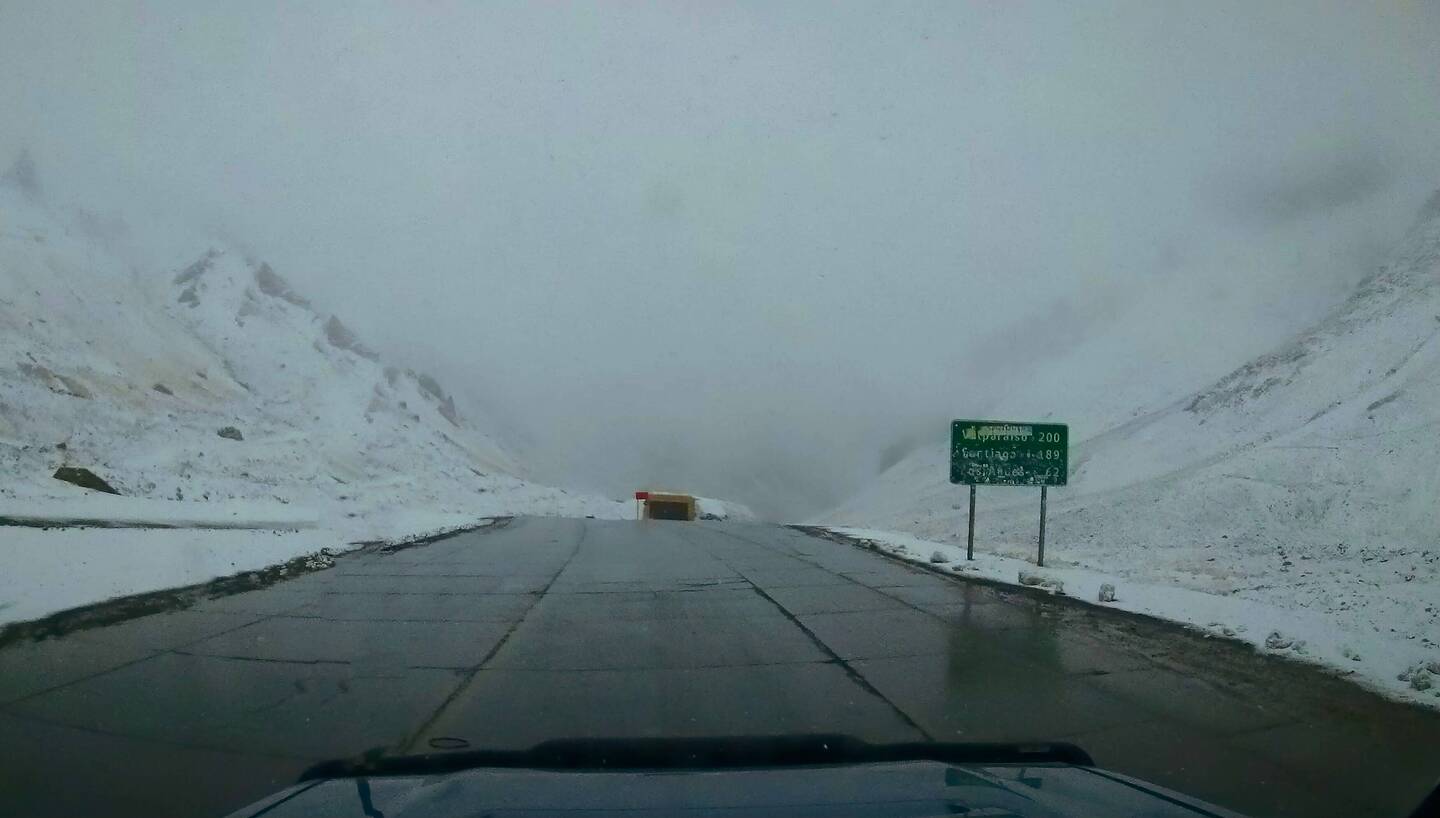
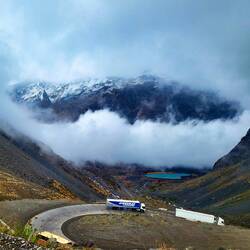
    We had an early morning start for the 3 hour drive to the border in order to beat the crowds and lengthy lines for immigration and customs clearance. As is the case for most border crossings between Argentina and Chile, they are at the top of a pass in the middle of the Andes. This is the main pass between the two countries, normally open 24 hours, and called Paso Cristo Redentor. At over 3,300m, it provided us with a good South American lesson - drizzle at 1,000m (Mendoza), is snow at 3,300m, even this early in the season. We were turned around at a road block 50km short of the border and waited for 2 days for the pass to be cleared. Second lesson - Argentina and Chile do have web sites that provide the status of border crossings. They’re just very hard to find, and they don’t get updated very often. We now know how to navigate them! When we were finally allowed to cross, a lot of the snow had disappeared, but we still experienced snow flurries and the temps were close to zero. More importantly, the scenery up to the pass was stunning and we got to see an armadillo.Read more

  • Back In Chile

    April 18, 2024 in Chile ⋅ ☀️ 19 °C

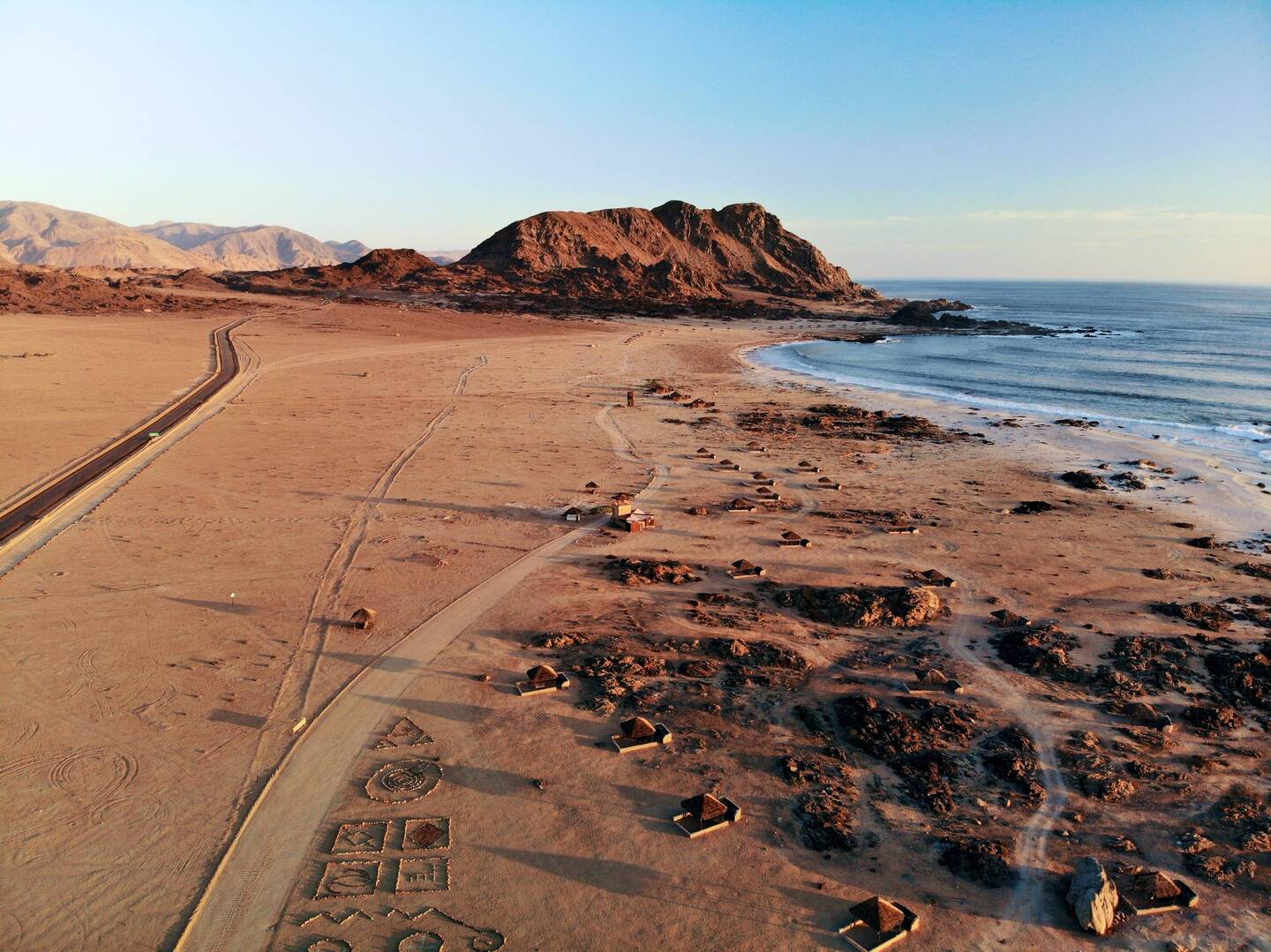
    With the pass cleared, we had a problem free, albeit slow, crossing into Chile. The aim - hit the coast, head north, visit some of the inland valleys (and the home of Pisco), then return to Argentina via Paso San Francisco (about 800km north). Our first night was spent in a pleasant sea-side camping area (we were the only customers), after which we headed inland to investigate the home of the national drink in the cactus-filled canyons. After the canyons we followed the dry (and dramatic) Atacama coastline before heading inland for our next border crossing. We stopped for the night at the regional city of Copiapó where we were informed that the pass had been devastated by the previous week’s storm and would be unlikely to open until the end of spring. Two options - head 800km south to the pass we crossed a few days earlier or 800 kms north to Paso Jama. While contemplating our next steps we had one of our phones stolen. Costly, but more of a pain and worry due to the information on the phone (passwords to be changed, SIM to be cancelled etc). Another tip - the Atacama region has been the worst so far (in our South American experience) for petty crime. We decide to head north, taking in more of the stark desert scenery before heading back inland at the Chile’s second largest city - Antofagasta. We finish this section of the trip with a camp in the remote desert, at a point where we managed to get a 50mm piece of steel embedded in one of the rear tyres. That’s enough bad luck for the time being!Read more

  • Up The Hill We Go

    April 22, 2024 in Chile ⋅ ☀️ 26 °C

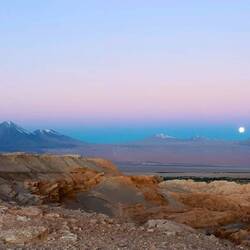
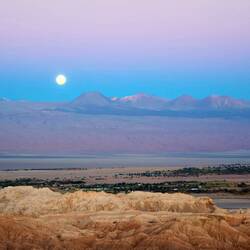
    Putting the setbacks behind us and with the tyre repaired, we head inland to the highlands of the Atacama desert. A stunning drive which takes the Troopy over 3,000m again before we arrive at the tourist town of San Pedro de Atacama. We spend the first couple of days exploring the salt plans and Valle de Lunas (Valley of the Moon). Timing was good with the full moon rising over the surrounding volcanoes at dusk. And flamingos! Flamingos on a salt pan 10,000 feet above sea level.Read more

  • Farewell Atacama

    April 24, 2024 in Chile ⋅ ☀️ 11 °C

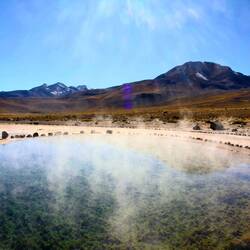
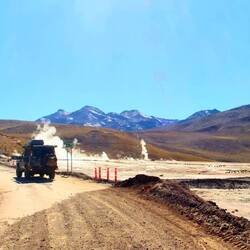
    For our final days in the Atacama we explore the town of San Pedro de Atacama with its quaint church (with cactus roof bearings) and the Geysers Del Tatio (in case we needed reminding that this was a volcanic area). We then headed up the awesome road to the border at Paso Jama. The Troopy achieved a new record of over 4,800m above sea level (over 16,000 feet), including the vehicle-destroying initial run out of San Pedro - a climb of over 2,200m in 40km - straight up, barely a curve, let alone a switchback. Coming down the other (Argentina) side was no less epic, but they do utilise sweeping curves.Read more

  • Argentina Hills

    April 27, 2024 in Argentina ⋅ ☀️ 26 °C

    After a successful border crossing at Paso Jama, we head across the vast high plans of NW Argentina. After passing the Great Salt Flats (the salt is 1,200m deep), some hard-core mountain towns, another epic climb and descent, we end up in the picturesque village of Purmamarca surrounded by multi-coloured hills.Read more

  • Back to the “Big Smoke”

    April 29, 2024 in Argentina ⋅ ☀️ 26 °C

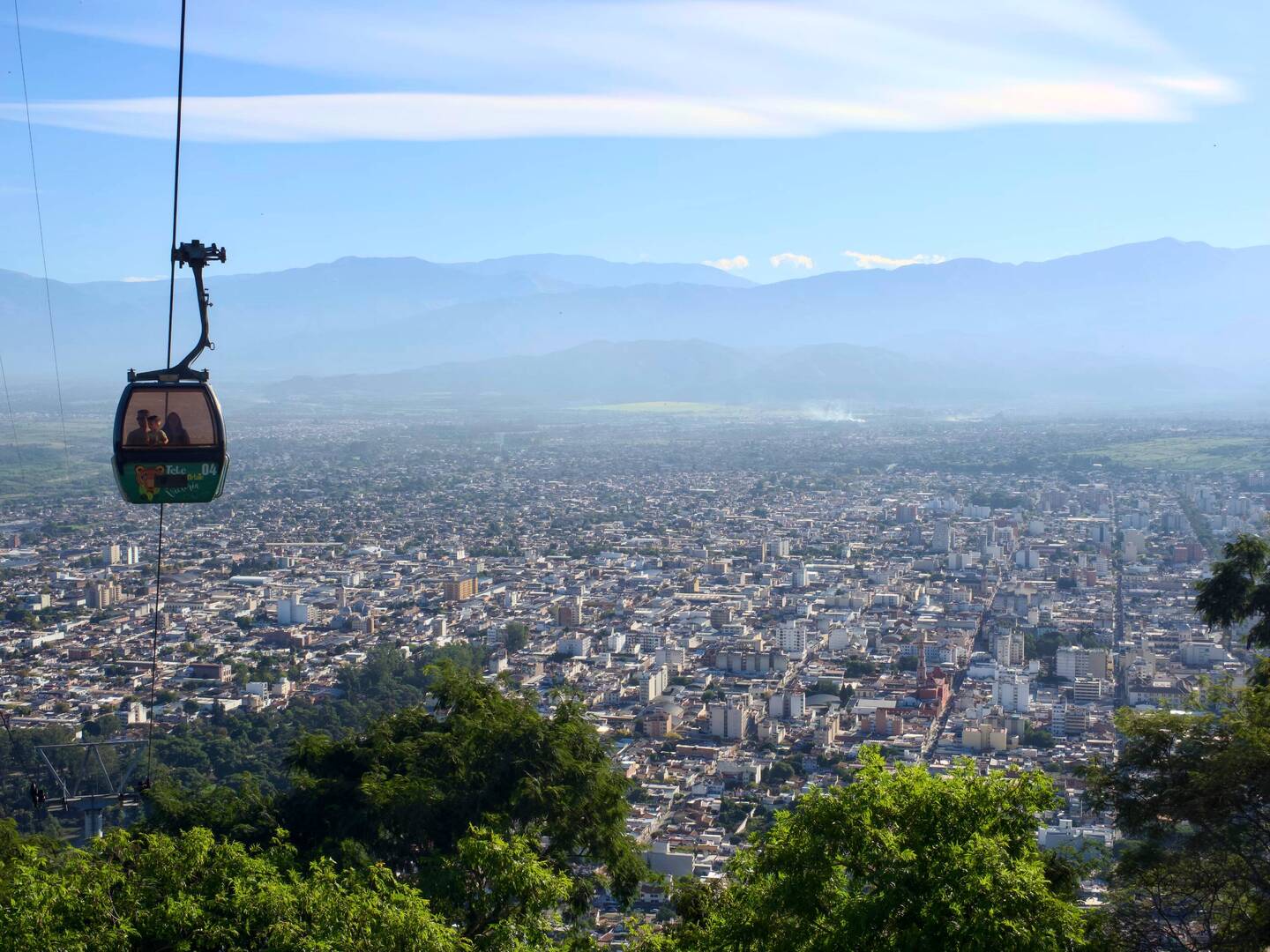
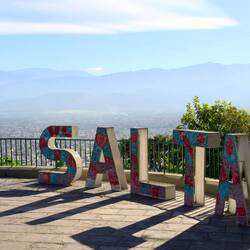
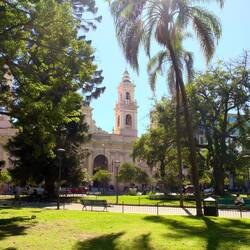
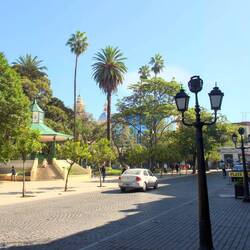
    After some time in the high Andes we make our way to the regional city of Salta - one of Argentina’s oldest. We find a good mechanic and get the troopy serviced and inspected and spend a couple of days catching up on admin. A very pleasant city centre with a great cable car to take you up the hill overlooking the city. It’s less than 100km from our last stop at (very dry) Purmamarca, but Salta is lush and green. Typical town square, grand buildings and magnificent churches. A pleasant couple of days.Read more

  • Back to Ruta 40

    May 1, 2024 in Argentina ⋅ ⛅ 26 °C

    After our time in Salta we headed Westward via the impressive Cuesta de Obispo range and road, surrounded by cactus and amazing views of the Andes. We hit Ruta 40 at its 4,500km mark (from its start point on Tierra Del Fuego), and made our way into the village of Cachi. It was a good reminder that South Americans take the 1st of May seriously. Everything was shut, including the camp ground. With advice from the local police we made our way up a remote valley, crossed the small river (no bridge) to find a lovely remote campsite. After the holiday we got the opportunity to explore Cachi, before heading South on Ruta 40 through amazing landscapes along its dusty path.Read more

  • More Wine!

    May 3, 2024 in Argentina ⋅ ☁️ 26 °C

    We’ve grown fond of Argentina wines, so spending a few days in Cafayate, the country’s second wine region, is a treat. The town is pleasant and the wines are good. At the end of our visit it is time to get back on track and head north. We get off the dirt for a while, but the road is no less interesting, taking us through Quebrada de las Conchas (Shell’s Ravine) with it’s spectacular walls and “El Sapo” (a rock that looks like a toad).Read more

  • Northern, North Argentina

    May 7, 2024 in Argentina ⋅ 🌬 24 °C

    Our last few days in Argentina are spent in the Northern towns of Tilcara and Humahuaca. In this remote corner of the country there is a distinct change in the ethnicity of the locals, with the majority now of Inca background as opposed to European. The towns are high, but we venture even higher - back to over 4,300 metres - to visit the coloured hills of Sierra del Hornocal.Read more

  • SW Bolivia - Part 1 - Camino San Antonio

    May 11, 2024 in Bolivia ⋅ 🌬 15 °C

    We commit to spending a little over a week in Bolivia’s far SW corner. Starting at the regional town of Tupiza, we climb quickly to over 4,200m as we head West through rugged mountain passes and even more rugged little villages (and people) who survive largely on Llama farming. This is where Butch Cassidy and the Sundance Kid met their end. We remain at between 4,200 - 5,000m, with not too distant peaks as high as 6,000m. It’s cold during the day and really cold at night. But still plenty of flamingos (no, they can’t walk on water - the lakes are mostly frozen).Read more

  • SW Bolivia - Part 2 - Eduardo Avaroa

    May 13, 2024 in Bolivia ⋅ 🌬 8 °C

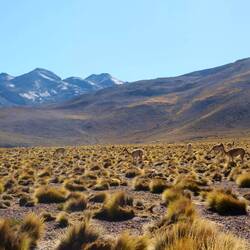
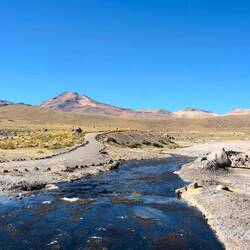
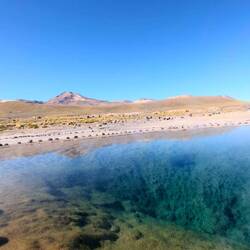
    For the second part of our SW Bolivia trip we venture into the wild and remote Reserva Nacional de Fauna Andina Eduardo Avaroa which forms the very SW corner of Bolivia. Nothing below 4,200m and frequently pushing 5,000m - at the valley level, it’s desolate, cold, windy and amazing. It’s also a contradiction - extremely cold, yet surrounded by volcanos and volcanic activity such as hot springs (appreciated by the flamingos and llamas), steam vents and boiling mud.Read more

  • SW Bolivia - Part 3 - Salar De Uyuni

    May 15, 2024 in Bolivia ⋅ ☀️ 17 °C

    For the final leg of our SW Bolivia tour we head north, passing through some very tough little mining towns and drop 1,000m to a paltry 3,700m above sea level as we make our way to the world’s largest salt flat - Salar De Uyuni. It’s other-worldly and immense at over 11,000 sq km (and up to 140m deep - that’s a lot of salt!). It’s assessed to contain 7% of the world’s lithium, which is being mined at a rapid rate. It has cactus covered islands, a couple of abandoned hotels made from salt, and the Dakar rally has crossed it a number of times since 2016. Unfortunately, its name-sake local town (Uyuni) is probably the least attractive in Bolivia, with its train grave-yard the best thing to see.Read more

  • Delightful Tarija

    May 17, 2024 in Bolivia ⋅ ☁️ 21 °C

    We have a change of plans based on recommendations and head SW (instead of North) to the regional city of Tarija. As would now seem to be the norm for driving in Bolivia, we cross a couple of epic 4,000m+ passes before arriving late afternoon. What a surprise this city is! Very clean, with a mixture of old and new buildings, a very nice central square surrounded by bars, restaurants and cafes that would be at home in Barcelona, and a level of affluence that we haven’t seen since Uruguay. This is the heart of Bolivia’s small, high altitude, wine region and it is very, very pleasant. We visit a couple of wineries, the infrastructure for which would compete with Barossa wineries, have a fantastic steak dinner, and take advantage of the very nice cafes. It is also the home of “Flamboyant Gin”, Lisa’s new favourite.Read more

  • Silver, Silver, Silver

    May 20, 2024 in Bolivia ⋅ ☀️ 17 °C

    The city of Potosí is our next stop, home of the famous Cerro Rico (Rich Mountain). It is estimated that half of the silver currently in circulation across the world originated from Cerro Rico. Most of this is dug out of the mountain in the 16th and 17th centuries when it fuelled the Spanish government wars and expansion. In the early 17th century Potosi had a population of almost 200,000, making it one of the largest cities in the world at that time. Tens of thousands were working in horrendous conditions in the mines every day, and hundreds of thousands died in the mines over the centuries. The truely valuable seams had been exhausted by the 18th century, but mining has continued to this day - and the conditions are still very harsh. The global impact of the wealth that was extracted from Cerro Rico is difficult to grasp. Fun fact (among many) - the symbol for Potosi silver was a P, S and I over lapped - which morphed into the current $ sign. We did a tough tour of the mine (hands and knee stuff at 4,200m above sea level), visited the mint and enjoyed the streets and buildings of the once wealthy city.Read more

  • How Many Capitals?

    May 22, 2024 in Bolivia ⋅ ☁️ 25 °C

    For trivia fans - what’s the capital of Bolivia? La Paz? Yes, and no. La Paz is the seat of government, but Sucre is enshrined in the constitution as the capital. In effect there are two capitals - both cities, and a third, Santa Cruz, the largest city, also claims a role. Sucre is delightful. Still high, at 3,000m, with beautiful old buildings, a vibrant city centre, fantastic central market and, of course, we had to visit and climb the cathedral tower. They also put on a military parade for Lisa.Read more

  • Breathing Easy Again

    May 25, 2024 in Bolivia ⋅ 🌬 16 °C

    We head to Santa Cruz, Bolivia’s largest city, dropping down from the 4,000m plus altiplano to the Eastern reaches of their Amazon plain. Santa Cruz is a large working city. Pleasant enough, with a vibrant main square, a couple of massive malls and the opportunity for Lisa show her angelic side. Sloths in the park is a good reminder of our proximity to the jungle. We did call into some Inca ruins on the way down the mountain, but they were shrouded in low cloud.Read more

  • The Jesuits were Here To!

    May 28, 2024 in Bolivia ⋅ ☁️ 21 °C

    Picking up on a theme from our time in Paraguay and Northern Argentina last year, we head further East to follow the Missionaries Route. These are a collection of small towns - San Jose, San Miguel, San Rafael, San Ignacio, and Conception cut out of the Amazon jungle (now surrounded by farm land) by Jesuit missionaries in the late 17th and early 18th centuries. The churches are fantastic and all with a common theme of massive pillars carved out of even more massive treesRead more

  • The Real Bolivia?

    May 30, 2024 in Bolivia ⋅ ☁️ 28 °C

    The plan was clear - headed back West and up the Andes to the regional city of Cochabamba. We got half way to the farming town of San Julian and got trapped by a farmer’s protest (they blocked all the roads with piles of soil). With the locals advising that the protest could last days, if not longer, we find a very small, very rough 120 km track to the north. The Troopy does well and we eventually arrive in the small city of Trinidad. We take a couple of days to recover and look around - it’s a tough cowboy town carved out of the jungle. There’s not too much of tourist value, but we do see a toucan up close. The new plan is to head direct to La Paz, but only 30km from town we come across another delay - a seriously bogged banana truck blocking the only road, with the situation deteriorating by the minute (driver’s increasingly blocking both approaches to the road). We take a chance to really test the Troopy and manage to get through the edges of the bog. The road is probably still blocked, but we managed to get through!Read more

  • Not Quite the “Death Road”

    June 2, 2024 in Bolivia ⋅ ☀️ 25 °C

    The road from Trinidad to La Paz is a classic drive that takes a few days. Starting at a few hundred metres above sea level we move from Amazon jungle, over a number of increasingly high passes, with the vegetation also changing from lush green to altiplano desert. The towns on the way are off the tourist route, with meat and beer and evening staple. The road itself ranges from average to very bad and we get another large piece of metal lodged in a tyre. The death road is closed by a landslide, but the alternate route is equally thrilling.Read more

  • La Paz

    June 4, 2024 in Bolivia ⋅ ☀️ 19 °C

    Bolivia’s (other) capital, La Paz, runs at a frantic pace. A confusing mixture of old and new, it is crammed into a high valley (at just under 4,000m) that challenges daily commuting. Wealth and poverty exist side-by-side in the crowed, steep streets. It is fascinating and fun. The city’s cable car system is an engineering marvel and provides both a speedy way of navigating the city and fantastic views of the valleyRead more