


Setenil de las Bodegas, Spain
 February 24, 2023 in Spain ⋅ ⛅ 14 °C
Located in the northeast of the province, Setenil de las Bodegas (or just Setenil) is one of the most unique towns in the White Villages of the Sierra de Cádiz due to its particular urbanRead more


Driving through Andalusia, Spain
February 24, 2023 in Spain ⋅ ⛅ 14 °C
So today we rented a car and drove through parts of Andalusia. It was beautiful. It could give Tuscany a run for its money. Spain is the leading producer of Olives in the world so most of the bushyRead more


Conjuto Arqueologico de Italia, Seville
February 25, 2023 in Spain ⋅ ⛅ 13 °C
In the course of the Second Punic War, after the Carthaginian defeat in the battle of Ilipa (206 BC) at the hands of the Roman army led by Publius Cornelius Scipio, a detachment of legionaries wasRead more

Traveler A nearby plaque reads: Despite not having been excavated completely, the data obtained has been used to consider this building as possibly one of the largest constructions in the city. The excavations carried out have defined two principal areas: one destined to a thermal use and the second was a domestic structure. The thermal area keeps the remainder of a heating system of two rooms, as well as a part of the frigidarium, or cold room, in which we can find the mosaic that gives name to the building. The Neptune mosaic is presided by the figure of the sea god, who appears on top of a carriage pulled by two sea horses and surrounded by dynamic mythological sea figures, usual iconography in thermal buildings. Other more realistic elements are the representations of species like a seashell, crustaceans, a red seabream or a gilt-head bream. The frame that encloses the central scene is decorated with fishing and fighting scenes between pygmies and cranes, as well as an interesting catalogue of fauna as an hippopotamus or a crocodile, clearly Egyptian inspired motifs.


Alcazar of Christian Monarchs, Cordoba
February 27, 2023 in Spain ⋅ ☀️ 5 °C
Alcazar of the Christian Monarchs (or just the Alcazar) in Cordoba was another beautiful royal residence in Spain. It was one of the residences of Isabella and Ferdinand. In fact, Christopher ColumbusRead more
Traveler The plaque on the side read: POLYPHEMUS AND GALATEA 2nd century AD 410cm x 510cm Romuta period mosaic found in 1959, in the basement of the Plaza de the Slider. It comes from a rich mansion with numerous mosaics whose schemes decorations are repeated in the set The motive of the pavement located in the trilines, is the love scene between Polyphemus and Galatea. The giant Polyphemus was one of the Cyclopes of Sicily, son of Pascidon (Neptuna) and known in mythology for devouring various companions of Ulysses that left him blind. He loved Galatea and killed her lover the shepherd Acis, crushing him with a rock The nymph Galatea, one of the ncrecids, appears naked, adorned with rich jewels. necklace, two bracelets and a bracelet. She covers her legs with a cloak and appears seated at back of a ketes, a sea monster with the head of a wolf, a serpentine body and the tail of a cetaces, habitual horse of the Nereids. The cyclops Polifemu wields like a cetru, a long pine from which hangs the reed, musical instrument. He appears naked, covering his thighs with a skin of leopard, his head is adorned with a beard and wavy hair and on his forehead the third garlic. The landscape is represented with great realism and schematization. The mosaicist has used a multitude of multicolored tesserae that give great chromaticism to the representation, using vitreous paste for the green and black tones. The scene is framed by a braided garland. On both sides, they have located two courses decorated with double meanders and surrounded by four dolphins in their corners. The theme of the mosaic is inspired by Hellenistic literature, in the poem by Philoxenus of Citerea "Phi Ciclope"


Mezquita Catedral of Cordoba, Spain
February 28, 2023 in Spain ⋅ ☀️ 5 °C
Cordoba's Mezquita Catedral (Mosque/Cathedral) has to be one of the most unique religious buildings in the world. The Mosque of Cordoba was built by the Moors in 784. After a series of extensions theRead more
Travelerthe pilgrimage your referring to is the one I have talked about for years. it's the Way of St. James and it's supposed to be amazing. it ends at the Santiago de Compostella where his remains are kept. That's awesome that you are even near there.
TravelerYes as I understand it many of these routes trek through north western Spain. we haven't gotten to go that way yet but we've heard from many Spainish travelers we've run into that it's some of the most beautiful landscape in all of Spain as well. it is nice we were near one of the routes, I think one runs through Seville as well.
 Do you have a Google camera that erases people from the photos ?? All your shots are like the scenes are perfect !! [EE]


Cordoba, Spain
February 28, 2023 in Spain ⋅ 🌙 5 °C
The origins of Cordoba are lost in the mists of time. Its position by the river and the fertile farming land of the Campiña made it a perfect place for the first prehistoric settlements. However,Read more


 does your Google phone erase people in the photo ?? Either that or you must ask everyone to get out before you snap the shot.... they are all beautiful photos !! [EE]


Cathedral of Granada and Sagrario Parish
March 2, 2023 in Spain ⋅ ☀️ 11 °C
Construction of the Cathedral began 26 years after Granada exchanged hands to the Catholic monarchs. There are actually 3 separate attached temples in the same "building." The Cathedral itself, theRead more


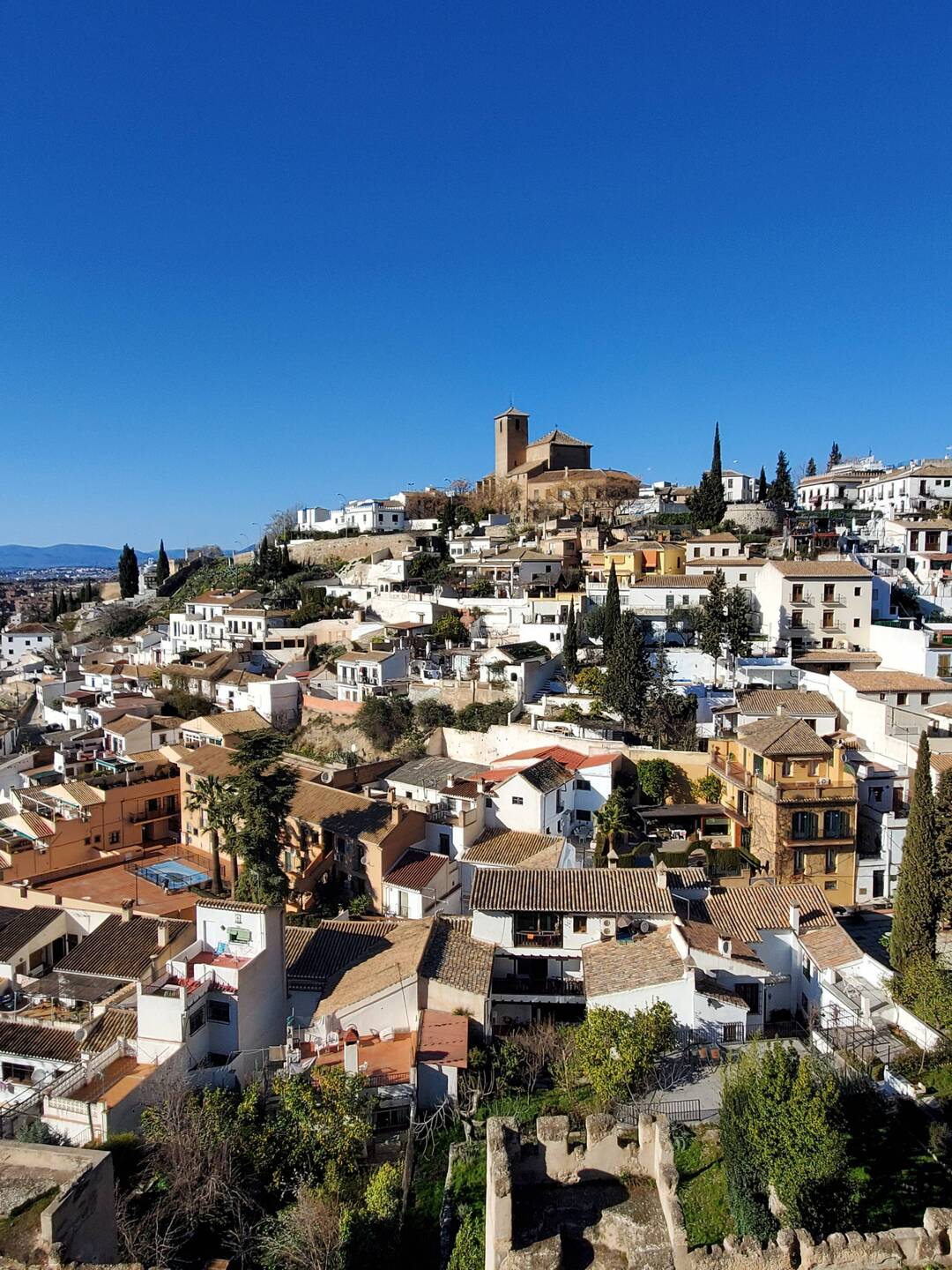


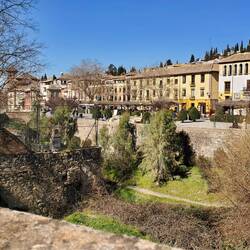


Granada, Spain
March 3, 2023 in Spain
In the 13th century Granada became the capital of the Emirate of Granada under Nasrid rule, the last Muslim-ruled state in the Iberian Peninsula. Granada was conquered in 1492 by the CatholicRead more


Alhambra, Granada, Spain
March 3, 2023 in Spain ⋅ ☀️ 14 °C
The Alhambra was an authentic walled city built by the Nasrid Kings of Granada, in the last period of Muslim domination in Spain. The palace itself was a walled city to help defend against anyRead more


Nazaré, Portugal
 March 9, 2023 in Portugal ⋅ ☁️ 15 °C
Nazaré is a relatively small but famous Portuguese village. Its footprint is 82.43 km² with just under 15k inhabitants.
This village is famous for having the highest waves in the world and beingRead more


Azulejos (Tiles) of Portugal
March 10, 2023 in Portugal ⋅ ☁️ 18 °C
The Azulejos of Portugal is a tradition that began from their Moorish ties. Muslim art is largely about geometric patterns, and that can be found in their art form "al zellij," which the PortugueseRead more


Lisbon, Portugal
March 10, 2023 in Portugal ⋅ ☁️ 15 °C
Bom Dia! (Good day)
Lisbon is the Capital and largest city in Portugal. Historically, it was occupied by many groups over the centuries. Excluding prehistory, it was first occupied by Romans, theRead more


Tangier, Morocco
 March 14, 2023 in Morocco ⋅ ☀️ 17 °C
-Brief History-
Tangier started as a Phoenician colony as early as the 10th century BC. From there, Berber tombs were fight dating back to the 6th Century BC. It first became a major port in the 5thRead more


Chefchaouen, Morocco
March 15, 2023 in Morocco ⋅ 🌙 16 °C
Chefchaouen was originally formed as a fortified city to protect against Portuguese invaders who had invaded north Africa as part of the Reconquista. It later became a popular place for both MuslimsRead more


Moulay Idriss Zerhoun, Morocco
March 18, 2023 in Morocco ⋅ ⛅ 14 °C
The small town of Moulay Idriss is in the central north of Morocco and is one of the holiest places in the country. The reason this town is so sacred for the Moroccans is because this is where theirRead more


Volubilis, Morocco
March 18, 2023 in Morocco ⋅ ☀️ 19 °C
Volubilis was first founded as in the 3rd century BC. At that time it was a Berber settlement, but traces of it becoming a proto-Carthaginian settlement have been found as well. From the 1st centuryRead more


Fes, Morocco
March 19, 2023 in Morocco ⋅ ☀️ 21 °C
Welcome to Fes. Founded in the 9th Century, it is a former capital of Morocco and a current capital of hand crafted goods and food.
When coming to Fes, there are two main attractions.
-TheRead more


Traveling through Morocco
March 24, 2023 in Morocco ⋅ ☀️ 19 °C
As Americans if we were pressed to describe what we thought Morocco looked like we'd probably have to assume a lot of desert and brown buildings with wild markets and cobras in baskets. While all ofRead more

TravelerThanks for this post. Most of these pictures are not what I expect to see when I think of Morocco. I do want to point out though that you mentioned baskets of cobras and then didn’t deliver!
TravelerHaha, we're still in Marrakech, and they do have them here. To take their picture we'll need to pay their handler. Emily read a great critique that paying them supports animal cruelty. So I may not get such a picture.
TravelerThat definitely makes sense as a reason not to get a picture. So what I’m reading is that you’re going to just buy the baskets of cobras to take with you to give them a better life?


Ait Ben Haddou, Morocco UNESCO & movies
March 24, 2023 in Morocco ⋅ ☀️ 25 °C
While setting up our base in Marrakech, we took a 3 day tour out east. Our first major stop was a town we've all seen, but never heard of, Ksar Ait Ben Haddou. Ait Ben Haddou is a Berber village andRead more


Todra Gorge, Morocco
March 25, 2023 in Morocco ⋅ ☀️ 15 °C
We stopped at Todra River and Gorge in the town of Ait Seguenouny to explore the area and see how the Berber tribes live and cultivate their land. Despite the very arrid climate, the river valley wasRead more


Sahara Desert, Morocco
March 25, 2023 in Morocco ⋅ ☀️ 29 °C
We had the wonderful experience of doing a three day tour through Southern Morocco which concluded with a stay out in the tip of the Sahara desert, this area known as Erg Chebbi. Our Berber guidesRead more


Food of Morocco
March 26, 2023 in Morocco ⋅ ☀️ 24 °C
Food of Morocco is delicious, but not the most diverse.
It is made famous by Tajine, which is the primary dish you'll find in any restaurant. We also took a cooking class for this. Tajine isn'tRead more


Cats of Morocco
March 26, 2023 in Morocco ⋅ ☁️ 30 °C
In Muslim culture, cats are considered the only "clean" animal and are thus usually welcomed all throughout their cities. They are also the only predominate animal welcomed in homes and buildingsRead more


Marrakesh, Morocco
March 26, 2023 in Morocco ⋅ ☁️ 28 °C
Marrakech, like many of the major cities, we once the capital of Morocco. It was the capital at its founding in 1070. Fes became the capital in the 13th century, but Marrakech regained capital statusRead more


Saint Sofia church, Sofia Bulgaria
 March 31, 2023 in Bulgaria ⋅ ☁️ 17 °C
St Sophia Church is one of few preserved Christian basilicas in Bulgaria.
The church was built in the 6th century on the site of several earlier churches predating it from the 4th century. After theRead more
Traveler I was able to put this through Google translate. It appears to be the decree of an Emperor, written in (from left to right), Latin, Bulgarian, and Greek. Here is what I was able to get: AMONG OTHER THINGS FOR PUBLIC THINGS ALWAYS PROVIDED FOR CONVENIENCE AND UTILITY, WE WANTED BEFORE AND ACCORDING TO THE OLD LAWS AND TO CORRECT THE PUBLIC DISCIPLINE OF THE ROMANS TOGETHER AND TO PROVIDE ID, SO THAT ALSO THE CHRISTIANS WHO LEAVE THE SECT OF THEIR PARENTS. THEY WILL RETURN TO THEIR GOOD MINDS FOR SUCH A REASON THAT THESE CHRISTIAN WILLS HAD SO MUCH INVASION AND SO MUCH STUPIDITY THAT THEY WERE NOT FOLLOWING THE OLD INSTITUTIONS WHICH PERHAPS THE FIRST PARENTS CONSTITUTED EACH OF THEM, BUT FOR THEIR ARBITRATION AND AS IT WAS THEIR WILL. THEREFORE THEY WOULD MAKE LAWS FOR THEMSELVES THAT THEY OBSERVED. AND THEY GATHERED DIFFERENT PEOPLE IN DIFFERENT WAYS. DENIQUE WHEN OUR ILLISUS HAD EXISTED IN THE SAME WAY, TO RETURN THEMSELVES TO THE OLD INSTITUTIONS, MANY HAVE BEEN SUBJECTED TO DANGER, MANY HAVE ALSO BEEN DISTURBED AND WHEN MANY PERSEVERED IN THE PURPOSE, AND WE SHOULD SEE THAT THEY SHOULD NOT EXHIBIT THE OWN WORSHIP AND RELIGION WHICH IS DUE TO THE GODS, NOR THE GOD OF THE CHRISTIANS OBSERVE, OBSERVING THE CONTEMPLATION OF OUR MOST GENTLE CLEMENT AND THE ETERNAL CUSTOM, WHICH THE SUN COMES TO INDIVIDUAL MEN. We are most ready to extend our mercy to each of these we believe. THAT THEY MAY BE CHRISTIANS AGAIN AND COMPOSE THEIR CONVENTIONS. SO THAT THEY DO NOTHING AGAINST DISCIPLINE. HOWEVER, OTHER LETTERS ARE SIGNIFICANT TO THE JUDGES, WHICH THEY SHOULD OBSERVE. THEREFORE, ACCORDING TO THIS INDULGENCE OF OURS, THEY SHOULD PRAY TO THEIR GOD FOR OUR SAFETY AND THE PUBLIC THINGS AS WELL AS THEIR OWN. SO THAT THE PUBLIC AFFAIRS MAY CONTINUE SAFE AND SECURE IN THEIR SEATS. (Lactanius. On the deaths of the persecutors. 34)


TravelerJeepers is this town designated a hard hat area by any chance??
Traveler death wish... one earth quake... SPLAT!!
Traveler good grief